Baggy jeans and wide-leg jeans often sit next to each other in the same denim collection, and at first glance the difference can look smaller than it really is. Both use more volume than slim or straight jeans, both can be styled casually, and both can be cut in rigid, washed or softer denim. Yet the pattern logic is different. The easiest way to see it is to stop looking only at the hem and follow the garment from the waistband through the hip, thigh, knee and ankle.
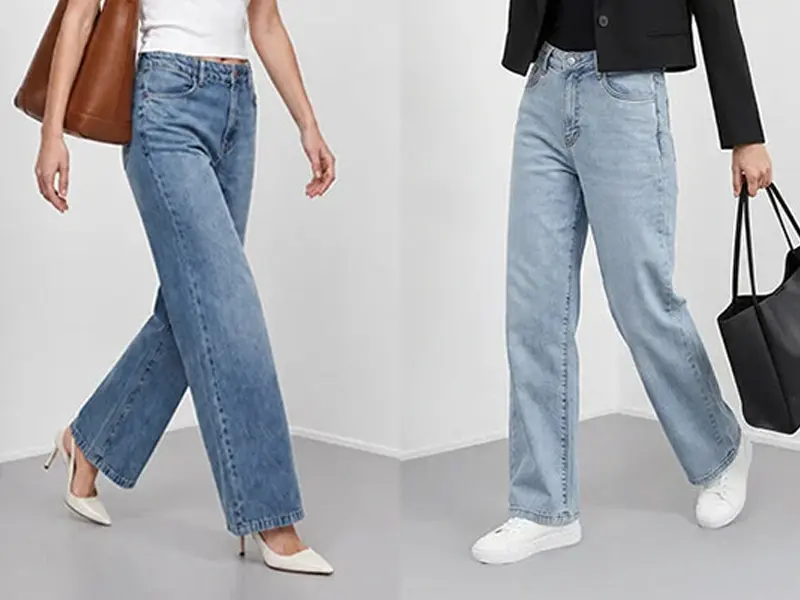
Baggy jeans create looseness through the seat, hip, thigh and leg, while wide-leg jeans are defined mainly by a broad, continuous leg silhouette. A baggy fit may taper slightly or stack at the hem; a wide-leg fit usually keeps more width through the knee and opening. Rise, fabric weight, drape, inseam and wash can make either style look softer, sharper or more exaggerated.
That difference matters whether someone is choosing a pair to wear or a brand is developing a new denim style. Two jeans can share the same labeled waist size and even a similar leg opening but look completely different because the top block, crotch depth, thigh ease and knee shape are not the same. In real product development, this is where a simple trend name becomes a measurable fit, and where careful choices about pattern, fabric and wash determine whether the finished garment still looks right after sampling and bulk production.
What Is the Difference Between Baggy and Wide-Leg Jeans?
Baggy jeans are defined mainly by generous ease through the upper block and legs, while wide-leg jeans are defined by a broad leg line that stays intentionally wide from the upper leg toward the hem. The most reliable comparison looks at waist, seat, hip, thigh, knee, leg opening and inseam together rather than judging the styles by one measurement or one retail label.
What Defines Baggy Jeans?
A baggy jean is built around visible space between the body and the garment. That extra room normally starts in the seat and upper thigh, not just at the hem, and it may be supported by a deeper crotch or a more relaxed rise. The lower leg can stay wide, narrow slightly or continue long enough to stack over footwear. Pocket size and placement also become more important as the seat grows larger, because small pockets on a very loose block can make the proportions look accidental rather than intentionally oversized. In pattern development, the rise, crotch balance, hip ease, thigh width, knee, hem and pocket scale need to be judged as one silhouette. A baggy jean that feels correct through the thigh but has an overly tight seat is not really balanced, even if the leg looks loose in a front-view photograph.
What Defines Wide-Leg Jeans?
Wide-leg jeans are recognized by the geometry of the leg rather than by maximum looseness around the seat. A style can fit fairly cleanly at the waist and upper hip, then move into a broad thigh, knee and hem, or it can begin with moderate ease and maintain that width all the way down. The visual goal is a deliberate leg line that reads as wide from several viewing angles. A structured denim can create a strong column, while a lighter and softer denim can turn the same general pattern into a fluid, trouser-like shape. For development teams, rise, hip release, thigh width, knee width, hem width and finished length should be assessed together. If the knee narrows too much, the jean starts to look more flared; if the hem narrows too much, it can drift toward relaxed straight or tapered territory.
| Fit Point | Baggy Jeans | Wide-Leg Jeans | Practical Check |
| Waist | Regular, relaxed or low-rise | Often more clearly defined | Waistband position and shape |
| Seat and hip | Usually generous | Controlled to moderately relaxed | Ease and side-seam balance |
| Crotch | May be deeper or dropped | Usually more balanced | Front and back rise relationship |
| Thigh | Strong visible volume | Wide but more deliberate | Where the leg begins to leave the body |
| Knee | Relaxed or mildly reduced | Usually remains broad | Continuity of the leg line |
| Leg opening | Wide, straight or slightly tapered | Usually remains visibly wide | Relationship to knee width |
| Inseam | Often regular to long | Cropped, regular, full or puddle | Break, floor clearance and stacking |
Are Baggy and Wide-Leg Jeans the Same?
They overlap, but they are not the same category. The word baggy describes how much ease is distributed around the body, while wide-leg describes the shape of the leg. A low-rise jean with a loose seat, deep crotch, oversized thigh and slightly narrower hem can still be clearly baggy even when its opening is not exceptionally wide. A high-rise jean can sit neatly at the waist and upper hip but carry substantial width from the thigh through the hem; that product reads as wide-leg without necessarily feeling baggy in the top block. This is also the reason retail names such as “baggy wide-leg” or “relaxed wide-leg” are possible. They describe hybrid designs. For product teams, the practical lesson is to turn style language into specific fit changes instead of relying on a label that different brands may interpret differently.
Which Measurements Separate the Two Fits?
The most useful measurements are front rise, back rise, hip, thigh, knee, leg opening and inseam. What matters most is the relationship between these points, not a single fashionable number. A half-measure increase of 0.5 inch at the knee adds 1 inch to the full circumference, which can noticeably change the lower-leg silhouette. Increasing only the thigh by 1 inch without adjusting hip or crotch balance may create excess fabric in the wrong place rather than a convincing baggy fit. The same applies to a wide leg: increasing the hem alone can create an A-shaped or flare-like result if the knee remains too narrow. Good fit review compares the entire measurement chain against the target body, fabric behavior and finished wash. Numbers are most useful when they explain the silhouette, not when they are treated as fixed rules for every size, gender or market.
How Do Baggy and Wide-Leg Jeans Fit Differently?
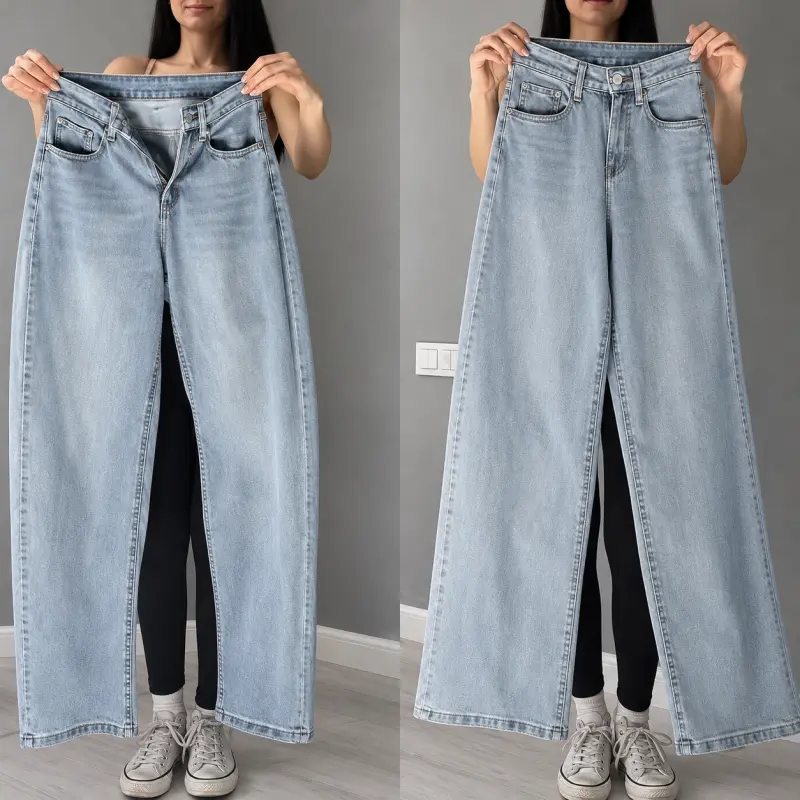
Baggy jeans usually carry more volume through the upper block, especially the seat, crotch and thigh, while wide-leg jeans can remain cleaner above the thigh and still maintain a broad lower leg. Rise, thigh-to-knee progression, inseam, hem width and fabric behavior then determine whether the finished shape reads as slouchy, vertical, stacked, puddled, structured or closer to a tailored denim trouser.
How Does the Top Block Differ?
The top block includes the waist, high hip, full hip, front rise, back rise, crotch extension and upper thigh. This area often reveals the difference before the hem does. A baggy pattern normally needs extra room across several of these measurements at the same time. Simply moving the side seam outward can make a jean wider without giving it the relaxed seat and crotch balance associated with a true baggy fit. Extra hip volume may also require changes to the back rise and crotch extension so the garment does not drag forward or form unnecessary folds under the seat. A wide-leg style can be much cleaner in this area. Many commercial designs use a shaped waistband and controlled upper hip, then create the major width through the leg. This contrast between a defined upper block and a broad lower leg is a large part of the classic wide-leg look.
How Do Thigh and Hem Widths Differ?
The thigh tells you where the silhouette begins, while the knee and hem tell you how it develops. Baggy jeans usually show obvious space at the upper thigh, so the denim falls away from the body soon after the crotch. From there, the leg can remain loose or narrow slightly. Wide-leg jeans rely more on continuity. The thigh, knee and opening work together to form one readable shape, and the transition should feel intentional rather than like three unrelated widths. Small pattern changes can have a large visual effect. If the knee half-measure moves from 10.5 to 11 inches, the full knee circumference increases by 1 inch. A similar change at the opening can make the leg appear substantially straighter and broader. These numbers are only examples, but they show why fit development works better with measurement relationships than with comments such as “make it wider” or “make it looser.”
How Does Rise Change the Fit?
Rise changes more than waistband height. It affects crotch depth, hip position, body proportion, pocket location and how the leg appears to start. High-rise wide-leg jeans often create a long visual line because the broad leg seems to begin closer to the natural waist. That can make the style look polished even when the hem is very wide. Low-rise baggy jeans produce a different effect, placing more emphasis around the high hip and often reinforcing a relaxed, 1990s, skate or Y2K attitude. Changing from high rise to low rise is not a matter of cutting fabric off the top of an existing pattern. Waist circumference, front and back crotch curves, zipper length, yoke, hip placement and pocket position all need to be reconsidered. The same is true in reverse: raising a waistband without adding the required back-rise capacity can create pulling, horizontal creases and an unstable fit when sitting.
How Does Length Change the Silhouette?
Length can change a loose jean almost as much as width. A wide-leg jean that finishes just above the floor can look clean and vertical, while adding 2 inches of inseam can turn the same lower leg into a softer puddle shape. Baggy jeans often use extra length to create stacking over sneakers or boots, but attractive stacking depends on the interaction between inseam, opening, fabric stiffness and footwear volume. Soft denim creates flatter and less predictable folds, while firmer rigid denim produces larger breaks that can look intentional or bulky depending on the pattern. Shrinkage must be considered as well. On a 32-inch inseam, 1% length change equals 0.32 inch, and 3% equals about 0.96 inch. Almost an inch of lost length is enough to move a hem from resting on the shoe to sitting visibly above it, so final length should be judged after the intended wash.
Which Denim Fabrics Work Best for Each Fit?
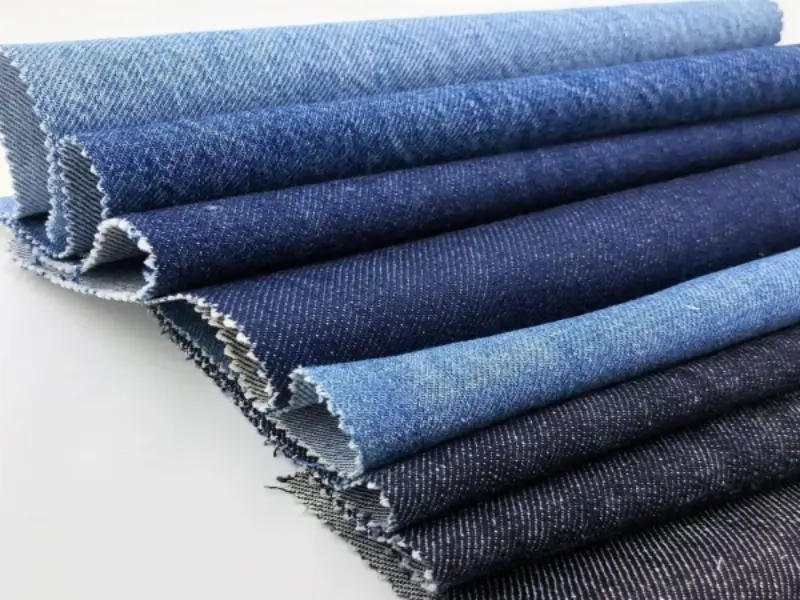
Baggy jeans usually work well in rigid or low-stretch denim that keeps the oversized volume visible, while wide-leg jeans can use either structured rigid denim or lighter, drapier fabric. The better fabric depends on the intended shape, season, wash, comfort level and price position. Fabric should support the silhouette rather than force the pattern to compensate for the wrong material behavior.
Is Rigid Denim Better for Baggy Jeans?
Rigid denim is often a strong choice for baggy jeans because it keeps space between the body and garment visible. Cotton-rich or 100% cotton constructions can hold the seat and thigh away from the body and create the dry, substantial character associated with vintage, skate and workwear-inspired denim. Rigid fabric also responds naturally to abrasion, fading and many authentic wash effects. The trade-off is bulk. Heavy rigid fabric creates more thickness at the waistband, fly, pocket corners and crotch seams, and a very long baggy leg can produce stiff folds around footwear. That is why a heavier denim is not automatically better. A softer 10 oz or 11 oz rigid construction may suit an everyday baggy fit, while a firmer 12 oz or 13 oz fabric may be more appropriate for a strongly structured statement silhouette. The fabric needs to reinforce the design without making the garment unnecessarily heavy or hard to move in.
Which Fabrics Give Wide-Leg Jeans More Drape?
Wide-leg jeans can follow two very different material directions. A lighter denim with a softer hand allows the leg to fall and move more like a trouser, which works well for spring and summer collections, wider hems and products intended to feel easy rather than stiff. A structured rigid denim does the opposite: it gives the leg a clearer edge and makes the side seam and hem look more architectural. Neither route is universally better. The useful question is whether the garment should stand, fall or move. A large hem made in a very soft 8.5 oz fabric may flow beautifully but lose some sculptural definition, while the same pattern in 12.5 oz rigid denim could feel too heavy for warm-weather wear. Fabric selection should therefore happen after the silhouette and end use are clear, with drape, thickness, wash response and seam bulk considered alongside the nominal ounce weight.
How Does Denim Weight Affect Shape?
Denim weight changes drape, structure, seam thickness, wash response and how the garment feels after several hours of wear. Practical development commonly works with ranges rather than treating one ounce value as a quality grade. Lightweight fabric can be excellent when movement is the priority, while a heavier construction can be more suitable when the design depends on visible volume and shape retention. The ranges below are useful for early development discussions, but the final result also depends on weave, yarn, finishing, fiber content and washing. A tightly woven 10 oz denim can sometimes feel firmer than a more open 11 oz construction, so swatches and washed samples remain more reliable than weight alone.
| Denim Weight | Typical Behavior | Baggy Jeans | Wide-Leg Jeans |
| 8-9.5 oz | Light, softer, higher drape | Soft summer or fluid baggy looks | Strong option for flowing wide legs |
| 10-11 oz | Balanced structure and movement | Versatile everyday range | Versatile commercial range |
| 12-13 oz | Firmer, more structured | Strong oversized and vintage shape | Architectural or structured wide leg |
Do Stretch and Recovery Matter?
Stretch still matters in loose jeans, but it plays a different role than it does in skinny styles. Baggy and wide-leg patterns already provide positive ease, so high elongation is rarely necessary simply to make the garment comfortable. A small amount of comfort stretch can still help a fitted high-rise waistband, sitting comfort or size tolerance, but recovery is often the more important performance question. If the fabric stretches and does not return, the knees can grow, the seat can drop and the waist can become loose during wear. This can damage the silhouette even when the jean was correctly measured at the start. Fabric performance also needs to be checked after the intended wash because enzyme, bleach, softening and repeated laundering can change extension and recovery. Changing to a different stretch fabric after the pattern has been approved may require another fit review, especially if the replacement fabric behaves differently under tension.
How Do Wash and Length Change the Look?
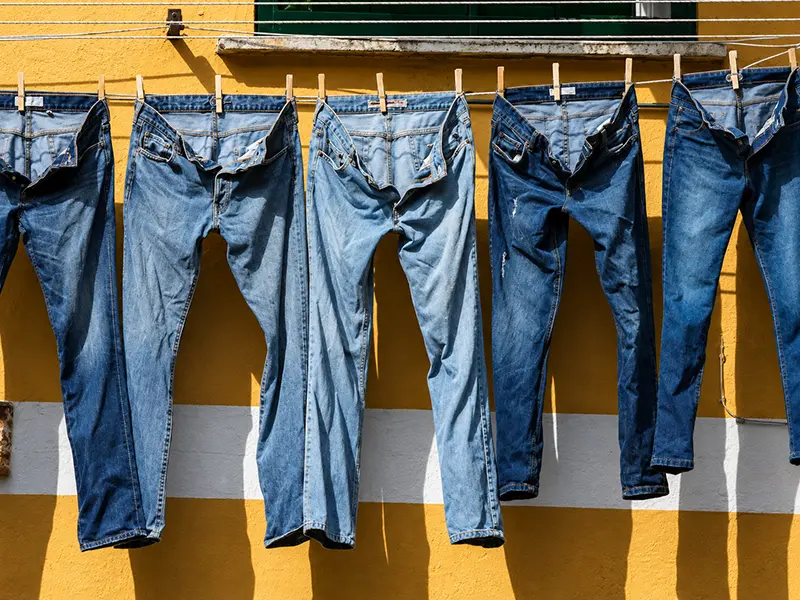
Wash changes color, surface contrast, hand feel and sometimes garment dimensions, while length determines whether the leg falls cleanly, breaks over footwear or stacks. Baggy jeans often suit vintage, faded and distressed treatments; wide-leg jeans can range from clean dark rinses to soft light washes. Both fits should be judged after washing because shrinkage and softening can alter the final silhouette.
Which Washes Suit Baggy Jeans?
Baggy jeans work naturally with finishes that reinforce a relaxed and worn-in character. Mid-blue vintage, stonewashed, sun-faded, whiskered and controlled distressed effects are common directions because the larger thigh and leg surfaces give the wash enough space to develop visible highs and lows. The wash still needs to match the fit. Heavy whiskers copied from a tight jean can look artificial on a loose thigh because the fabric is not under the same body tension. Abrasion and ripping also need to be placed with stress in mind. A large tear close to a pocket corner or seam behaves differently from one in the center of a broad panel and may require reinforcement. Softening is another variable because it can make a rigid first sample hang very differently after washing. The best wash is therefore not just an attractive color; it should reinforce the silhouette and remain controllable when the effect is repeated across production.
Which Washes Suit Wide-Leg Jeans?
Wide-leg jeans can carry a wide range of finishes because the silhouette works in both casual and more polished wardrobes. A dark rinse or clean black finish emphasizes the long vertical line, while mid-blue enzyme and vintage washes make the style more familiar and relaxed. Light washes can be especially effective in spring and summer because they reduce visual weight, particularly when paired with lighter fabric. One practical challenge is shade consistency. Broad legs present large uninterrupted panels, so front-to-back variation, side-seam effects and patchy washing can be easier to notice than on heavily distressed narrow jeans. Matching sets require even tighter control because a wide-leg jean and jacket may react differently even when cut from the same base fabric. Shade bands, approved wash references and first-bulk checks help define an acceptable visual window rather than expecting every garment to be mathematically identical.
How Does Stacking Change Baggy Jeans?
Stacking occurs when there is more lower-leg length than can fall cleanly above the shoe, causing the fabric to gather into repeated folds. On a baggy jean, this can strengthen the oversized look and create an intentional relationship with sneakers or boots. Inseam alone does not control the result. Leg opening, fabric stiffness and footwear volume are equally important. A very wide opening may simply fall around the shoe instead of stacking, while a narrowish baggy opening can build more compact folds. Very soft denim may collapse into irregular creases, and very rigid denim can create bulky horizontal breaks. Product teams should test the garment while walking and sitting because a hem arranged perfectly for a photograph may move very differently in daily wear. It is also useful to decide early whether stacking is a design requirement or merely a styling option, since that decision affects inseam grading and the need for alternative lengths.
How Does Shrinkage Affect Final Length?
Shrinkage can change the intended look even when the sewing pattern was accurate. The effect becomes obvious when a long or floor-skimming style loses more length than expected. The calculation is straightforward: finished length equals the original measurement multiplied by one minus the shrinkage rate. The example below shows how the same 33-inch unwashed inseam can finish at noticeably different points after washing. These figures illustrate the mathematics only; actual denim shrinkage should be measured on the specific fabric and wash route used for the product.
| Length Shrinkage | 33 in Before Wash | Approx. Finished Inseam | Visual Risk |
| 1% | 33.00 in | 32.67 in | Small but visible on precise full lengths |
| 2% | 33.00 in | 32.34 in | May reduce the intended shoe break |
| 3% | 33.00 in | 32.01 in | Nearly 1 in shorter than the raw garment |
| 5% | 33.00 in | 31.35 in | Can remove puddling or stacking completely |
Shrinkage should also be measured across width because hip, thigh, knee and opening may not change at the same rate as the inseam. Using one blanket percentage across an entire pattern can therefore overcompensate some areas and undercompensate others. A more reliable process records the garment before wash, measures each important point after wash, calculates the change by direction and adjusts the pattern where needed. If the fabric or wash route changes materially, the measurement review should be repeated rather than assuming the old compensation still applies.
Which Fit Should You Choose?
Choose baggy jeans when the product needs stronger seat and thigh ease, a relaxed streetwear attitude or intentional stacking. Choose wide-leg jeans when the goal is a cleaner continuous leg and stronger vertical proportion. For a denim collection, the better choice depends on the intended customer, rise, fabric, wash, season, styling direction and what silhouettes already exist in the assortment.
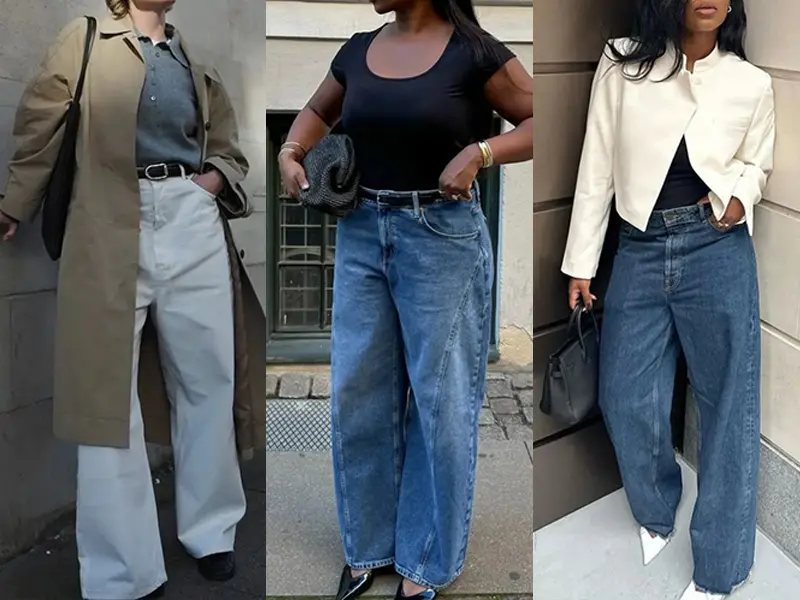
Which Fit Is Better for Streetwear?
Baggy jeans have a natural advantage in streetwear because the visible looseness is part of the design language. Oversized tees, hoodies, boxy jackets, chunky sneakers and workwear-inspired pieces all sit comfortably beside a roomy seat and thigh. The larger pattern also provides visual space for carpenter loops, cargo pockets, distressing and stronger vintage washes. Wide-leg jeans can still work extremely well in street styling, especially with low rises, puddle lengths or washed black finishes, but they move more easily into minimal and polished wardrobes. For a brand, this distinction can help each style perform a separate job. If a range already has a structured wide leg and a clean straight jean, a baggy fit can create a stronger trend contrast. If the collection is dominated by relaxed streetwear, a cleaner wide leg may expand the range without abandoning the broader loose-denim direction.
Which Fit Looks More Polished?
Wide-leg jeans generally have an easier route to a polished appearance because the top block can stay controlled while the leg provides the visual drama. A high rise, contoured waistband, balanced hip and clean side seam can create a shape that sits somewhere between traditional jeans and tailored trousers. Dark indigo, rinse, black and clean mid-blue finishes reinforce that effect because they keep attention on the silhouette rather than on heavy surface treatment. Baggy jeans can still look premium, but the proportions require more control. Pocket scale, crotch depth, waistband shape, hem length and wash must make the looseness feel deliberate. It is more useful to think in terms of polished versus relaxed than expensive versus inexpensive. Either fit can support a premium price position when the fabric, pattern, construction, hardware and finishing are strong enough to justify it.
Which Fit Works for Different Body Types?
Body-type rules are usually less useful than fit variables. Wide-leg jeans can create a strong vertical line when the waist is stable and the length is controlled, while baggy jeans provide more space through the seat and thigh. For shorter wearers, excessive puddling can compress the visual proportion, while a cleaner full length may preserve more leg line. For people with a larger waist-to-hip difference, waistband curvature, back rise and hip room can matter more than whether the product is labeled baggy or wide-leg. The most reliable approach for a brand is to fit-test the base size on the intended body profile and then validate the grading across several sizes. A style that looks balanced in size 27 can change character in size 32 if thigh, knee and opening are graded mechanically without considering how the silhouette should scale. Good grading preserves the design idea rather than merely adding circumference everywhere.
Which Fit Should Brands Add to a Collection?
A strong assortment often benefits from both silhouettes, but each should have a clear role. A core wide-leg jean can use a medium or high rise, balanced width and repeatable dark or mid-blue wash. A trend baggy style can use more upper-block ease, a longer inseam and a stronger vintage or distressed direction. A seasonal wide leg can move into lighter 8-10 oz fabric, while a structured baggy product can move toward 12 oz or heavier denim when the intended look needs more body. The most useful assortment question is not which fit is more popular in isolation, but what the current range is missing. If several existing styles already use the same loose hip, similar hem width and similar mid-blue wash, another near-duplicate can create internal competition rather than new demand. Fit, fabric and finish should give each SKU a recognizable reason to exist.
- Core wide leg: balanced rise, commercial width, repeatable dark or vintage wash.
- Trend baggy: stronger seat and thigh ease, longer inseam, more directional styling.
- Summer wide leg: lighter 8-10 oz fabric and softer drape.
- Structured baggy: firmer 12 oz or heavier denim when the design needs more body.
- Statement option: distinctive wash, cargo details, embroidery or controlled distressing.
How Are Baggy and Wide-Leg Jeans Developed for Production?
Reliable production begins by translating the intended silhouette into measurable standards for rise, hip, thigh, knee, leg opening and length. Development then moves through fabric selection, pattern making, fit samples, wash trials, revisions and PP approval. Bulk production should use the approved pattern, measurements, wash standard and workmanship references, with critical dimensions checked again after washing, so the silhouette does not drift between development and shipment.
How Is a Reference Image Turned Into a Fit?
A reference image is useful inspiration, but it is incomplete technical information. A front photograph can suggest rise, thigh volume, leg width and wash character while hiding the back rise, yoke, pocket placement, waistband construction, inseam, internal seams and actual fabric behavior. Development begins by identifying whether the reference is baggy, wide-leg or a hybrid, then breaking the look into decisions: where the waist sits, how much hip ease is visible, how quickly the thigh leaves the body, whether the knee stays wide, how the hem meets the shoe and whether the denim stands or drapes. Those observations become measurable assumptions that can be reviewed before sampling. When the customer only has an image, JEANZIO can use this type of image-to-sample route to convert visual information into pattern, measurement, fabric and wash decisions rather than pretending the missing details can be read perfectly from a photograph.
How Are Patterns and Fit Samples Approved?
Pattern approval works best when each revision solves a defined problem. Comments such as “make the fit better” are difficult to repeat, while instructions such as “reduce the knee half-measure by 0.5 inch, keep the opening unchanged and shorten the inseam by 0.75 inch” can be measured and verified. Early fittings should resolve the large structural issues first: rise, crotch balance, hip ease, thigh volume and overall length. Once the silhouette is stable, the team can refine waistband shape, pocket position, knee transition, hem and topstitching. A PP sample should represent production conditions as closely as practical, including the approved fabric, wash, trims and key construction. JEANZIO’s documented development organization includes 3 designers, 6 pattern makers and 15 sample makers, supporting roughly 60-90 new style developments per month. First samples typically take about 7-15 days, while revisions and PP samples are commonly planned around 7-10 days depending on materials, wash and complexity.
How Is Wash Shrinkage Controlled?
Shrinkage control starts before bulk washing. Fabric construction, finishing and the intended wash route should be understood while the pattern is still being developed because length and width do not always shrink at the same rate. A practical sequence measures the development garment before wash, processes it through the intended route, remeasures the important points, calculates the change and adjusts the pattern where needed. If a 33-inch inseam becomes 32 inches, the reduction is about 3.03%; if the hip changes by only 1.5%, applying a blanket 3% compensation across the whole pattern would be inaccurate. Wash also changes hand feel, and that can alter the silhouette even when measurements remain within tolerance. A rigid wide leg can gain more drape after softening, while a structured baggy jean can lose some of its intended body. Appearance, hand feel and measurements therefore need to be approved together rather than as separate problems.
How Is Bulk Fit Consistency Checked?
Bulk consistency depends on controlling several stages instead of relying only on a final inspection. Fabric lot and shade should be identified before cutting, and the cutting room should use the approved pattern version. Inline sewing checks can catch construction, symmetry and critical measurement issues before large quantities continue. Pre-wash inspection should stop avoidable defects from entering the wash process, while the first bulk wash provides an opportunity to compare shade, hand feel, dimensions and appearance with the approved standard before the full lot is released. JEANZIO’s documented quality route includes material inspection, cutting checks, inline inspection, pre-wash review, first-bulk and post-wash control, 100% finished-garment inspection, final AQL 2.5 or customer-specific audit, and packing verification. This matters especially for loose silhouettes because a relatively small knee, rise or inseam shift can change how the product is perceived even when the garment is technically wearable.
Baggy jeans and wide-leg jeans belong to the same broader movement toward relaxed denim, but they solve different design problems. Baggy jeans are mainly about the distribution of ease around the seat, hip, thigh and leg, while wide-leg jeans are mainly about maintaining a deliberate broad leg line. Once rise, fabric weight, drape, wash, length and grading are considered together, the distinction becomes much easier to recognize. For brands developing either silhouette, the strongest results usually come from defining the intended visual outcome first and then turning it into measurable pattern, material and wash standards that can survive the move from a fit sample to repeated bulk production.
Frequently Asked Questions
Are wide-leg jeans baggier than baggy jeans?
Not necessarily. A wide-leg jean can have a larger hem than a baggy jean while still fitting more closely through the waist, seat and upper hip. Baggy fit is better understood through total ease, particularly around the seat, crotch and thigh, while wide-leg fit is defined more strongly by the shape of the leg. Comparing only the opening can therefore give the wrong answer. Look at the hip, thigh, knee and opening together and consider where the fabric begins to move away from the body.
What is the easiest way to tell baggy jeans from wide-leg jeans?
Start at the upper thigh rather than the ankle. If the seat, crotch and thigh already look substantially oversized and the leg continues loosely downward, the jean is probably baggy. If the waist and hip are relatively controlled but the leg keeps a clear broad line through the thigh, knee and hem, it is more likely wide-leg. Side-view photographs are useful because they show crotch depth and seat volume, which are easy to miss when only the front of the garment is visible.
Can baggy jeans also have a wide leg?
Yes. A jean can combine a baggy top block with a wide lower leg, which is why names such as baggy wide-leg appear in fashion retail. In that case, the product carries both substantial hip and thigh ease and a broad knee-to-hem line. The label alone still does not tell the whole story. Product developers should define rise, hip, thigh, knee, leg opening and inseam measurements so the intended hybrid silhouette can be sampled and repeated instead of relying on a descriptive name that can be interpreted differently.
Is rigid or stretch denim better for wide-leg jeans?
Both can work, but the choice should follow the intended silhouette. Rigid denim is useful when the wide leg needs a clean, structured column and more authentic denim character. Lightweight or comfort-stretch fabric can work when the goal is softer movement, easier sitting comfort or a more fluid trouser-like appearance. High stretch is usually unnecessary because the pattern already provides room. Whatever fabric is selected, its wash shrinkage, drape and recovery should be tested because those properties can change the finished fit even when the original pattern remains identical.
What denim weight is good for baggy jeans?
Many baggy styles work well around the medium to heavier denim range because the fabric needs enough body to keep the loose volume visible, but there is no single correct weight. Roughly 10-11 oz can offer a balanced everyday result, while 12-13 oz can support a more structured vintage or streetwear silhouette. Lighter fabric can work for softer summer versions. Ounce weight should always be considered with weave, stiffness, finishing and wash because two fabrics with the same nominal weight can hang very differently.
How do brands keep wide-leg or baggy jeans consistent after washing?
Consistency comes from controlling the process rather than measuring only the final garment. The fabric lot, pattern version and wash standard should be defined before bulk production. Development samples should be measured before and after washing so shrinkage can be compensated in the pattern. During production, cutting, sewing, pre-wash condition, first-bulk wash, post-wash measurements and final appearance should be checked against approved references. This is especially important for loose silhouettes because small changes in inseam, knee width or rise can visibly alter the intended shape.