Strong fabric needs strong stitching.
Many clients ask us what type of thread makes jeans last longer and keeps seams from breaking.
At Jeanzio, we emphasize that the right thread is just as critical as the denim itself.
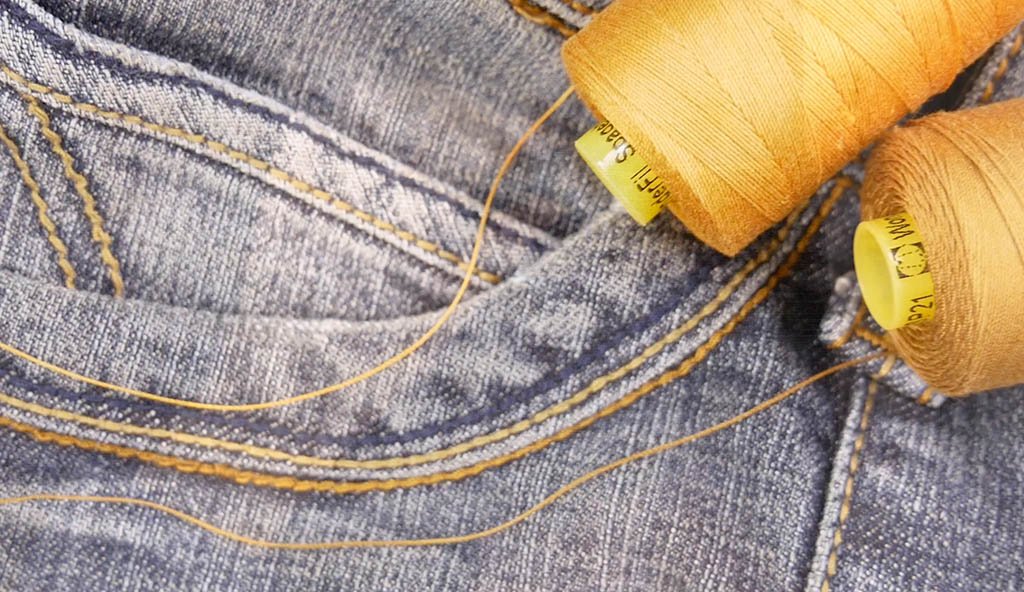
The thread used to sew jeans is typically core-spun polyester thread wrapped in cotton. This type balances strength, durability, and wash resistance while preserving the traditional cotton look. Heavy-duty polyester and sometimes nylon threads are also used for specific stress points.
Thread choice influences not only performance but also the look of jeans.
Why is special thread needed for jeans?
Denim creates stress.
Jeans are made from heavy woven fabric, which places pressure on seams. Normal sewing thread cannot withstand repeated wear and washing.
Key Requirements
- High tensile strength.
- Resistance to abrasion.
- Ability to handle industrial washing.
- Consistent colorfastness.
Our Insight
At Jeanzio, we always recommend industrial-grade threads tested under denim washing conditions.
What is core-spun polyester thread?
The industry standard.
Core-spun polyester thread has a polyester filament core wrapped with cotton, combining durability with a natural appearance.
Benefits
- Stronger than pure cotton.
- Cotton wrap provides authentic denim look.
- Resists shrinkage and breakage.
- Works well with high-speed sewing machines.
Our Insight
We use core-spun thread as the default in nearly all our jeans production.
Why isn’t 100% cotton thread common anymore?
Tradition vs performance.
Pure cotton thread was used in heritage denim, but it tends to break faster, especially under stress and repeated washing.
Cotton Thread Traits
- Matches vintage authenticity.
- Fades with denim for classic look.
- Weakens quickly with washing.
Our Insight
We recommend cotton thread only for heritage-inspired collections where authenticity outweighs durability.
What role does polyester thread play?
It adds durability.
Polyester thread, either pure or core-spun, is preferred for modern jeans because of its strength and wash resistance.
Polyester Advantages
- High tensile strength.
- Resistant to chemicals and bleach.
- Less prone to shrinking.
Our Insight
We rely on polyester-dominant threads for high-volume production with strict durability standards.
Are nylon threads used in jeans?
Yes, but selectively.
Nylon thread is stronger than polyester but less common due to higher cost and shinier appearance.
Nylon Thread Traits
- Extremely durable.
- Used in heavy-duty workwear denim.
- Shiny finish not always desirable in fashion denim.
Our Insight
We sometimes use nylon for reinforcement areas like belt loops or workwear jeans.
What about thread thickness in jeans?
Thickness signals strength.
Jeans often use heavier threads (Tex 40–80) for durability, with thicker topstitching for visible reinforcement.
Thread Size Guide
| Tex Size | Application |
|---|---|
| Tex 40–60 | General seams |
| Tex 60–80 | Topstitching, waistband |
| Tex 90+ | Heavy-duty workwear seams |
Our Insight
We help clients choose thread size based on garment design and price point.
Why is color important in thread selection?
Thread is branding.
Contrast stitching in gold, orange, or tobacco shades has become iconic in jeans, while tonal thread offers subtle styling.
Color Choices
- Contrast colors (orange, gold) = heritage authenticity.
- Tonal colors (navy, black) = modern minimalist look.
- Specialty threads (metallic, dual-tone) = fashion capsules.
Our Insight
We offer custom-dyed threads to match branding for premium collections.
How do thread types affect sustainability?
Eco demand extends to thread.
Sustainable thread options include organic cotton threads, recycled polyester threads, and waterless dyeing processes.
Sustainable Options
- Recycled PET polyester threads.
- Organic cotton sewing threads.
- Threads dyed with eco-certified processes.
Our Insight
At Jeanzio, we integrate eco threads for clients targeting sustainability certifications.
What stitch types depend on thread strength?
The stitch amplifies the thread.
Strong threads are required for chain stitching, lock stitching, bar tacks, and double topstitching in jeans.
Key Applications
- Chain stitch hems → requires heavy-duty thread.
- Bar tacks on pockets → needs high tensile strength.
- Double topstitching → uses thicker threads for visibility.
Our Insight
We combine thread and stitch strategy for maximum durability in jeans.
What should clients consider when choosing thread?
Thread choice should reflect brand positioning, durability needs, and aesthetic identity.
Client Checklist
- Decide between authenticity (cotton) or durability (core-spun/polyester).
- Select thread thickness based on denim weight.
- Match thread color to brand aesthetic.
- Confirm wash resistance in bulk testing.
- Consider eco thread options for sustainability goals.
At Jeanzio
We help clients balance authentic denim aesthetics with modern performance in thread selection.
Conclusion
The thread used to sew jeans is usually core-spun polyester with a cotton wrap, chosen for durability, wash resistance, and authentic look.
Other options include 100% cotton for heritage denim, nylon for workwear, and eco threads for sustainable collections.
At Jeanzio, we guide clients in selecting the right thread to ensure jeans are both stylish and long-lasting.