When clients come to us with denim projects, one of the most important technical questions they ask is: what thread should be used for jeans?
At Jeanzio, we explain that the thread isn’t just a small detail — it defines durability, style, and brand identity.
The best thread for jeans is core-spun polyester wrapped in cotton, usually in Tex 60–80 for seams and Tex 90–120 for topstitching. This type combines strength, wash resistance, and authentic denim appearance. Alternatives include 100% cotton thread for heritage jeans and recycled polyester for sustainable lines.
Choosing the right thread ensures jeans survive daily wear and maintain their brand value.
Why does thread choice matter for jeans?
It’s the hidden backbone.
Denim fabric is thick and heavy, so weak thread will break, unravel, or distort seams after washing. Thread must match denim’s durability.
Thread Functions
- Holds heavy fabric layers together.
- Reinforces stress points like pockets and belt loops.
- Contributes to branding through visible topstitching.
Our Insight
At Jeanzio, we test thread strength and wash resistance before approving bulk runs.
What is core-spun polyester thread?
The industry standard.
Core-spun polyester thread has a polyester filament core for strength and a cotton wrap for authentic appearance.
Benefits
- High tensile strength.
- Resistant to abrasion and washing.
- Blends naturally with cotton denim.
- Performs well on high-speed industrial machines.
Our Insight
We use core-spun polyester thread in 90% of our production because it balances performance and style.
Why isn’t pure cotton thread common anymore?
Tradition vs practicality.
100% cotton thread was standard in early jeans, but it breaks faster under stress and fades too quickly with modern washing.
Cotton Thread Traits
- Matches vintage authenticity.
- Ages and fades with denim.
- Less durable, especially in mass-market jeans.
Our Insight
We recommend pure cotton thread only for heritage or reproduction denim collections.
What about polyester or nylon threads?
Alternatives for strength.
Polyester and nylon threads are stronger than cotton, making them suitable for workwear jeans or heavy-duty applications.
Comparison
- Polyester → Strong, cost-effective, versatile.
- Nylon → Stronger, but shinier (less authentic).
- Recycled Polyester → Eco-friendly alternative.
Our Insight
We use nylon selectively for belt loops, workwear jeans, or reinforcement stitching.
How does thread thickness influence jeans?
Size matters.
Thread size is measured in Tex (grams per 1,000 meters). Jeans typically use thicker threads for visible durability.
Thread Size Guide
| Tex Size | Use Case |
|---|---|
| Tex 40–60 | Standard seams |
| Tex 60–80 | Jeans construction (main seams) |
| Tex 90–120 | Topstitching, decorative seams |
Our Insight
We help clients choose thread size based on denim weight and style positioning.
Why are jeans stitched with orange or yellow thread?
It’s about visibility and heritage.
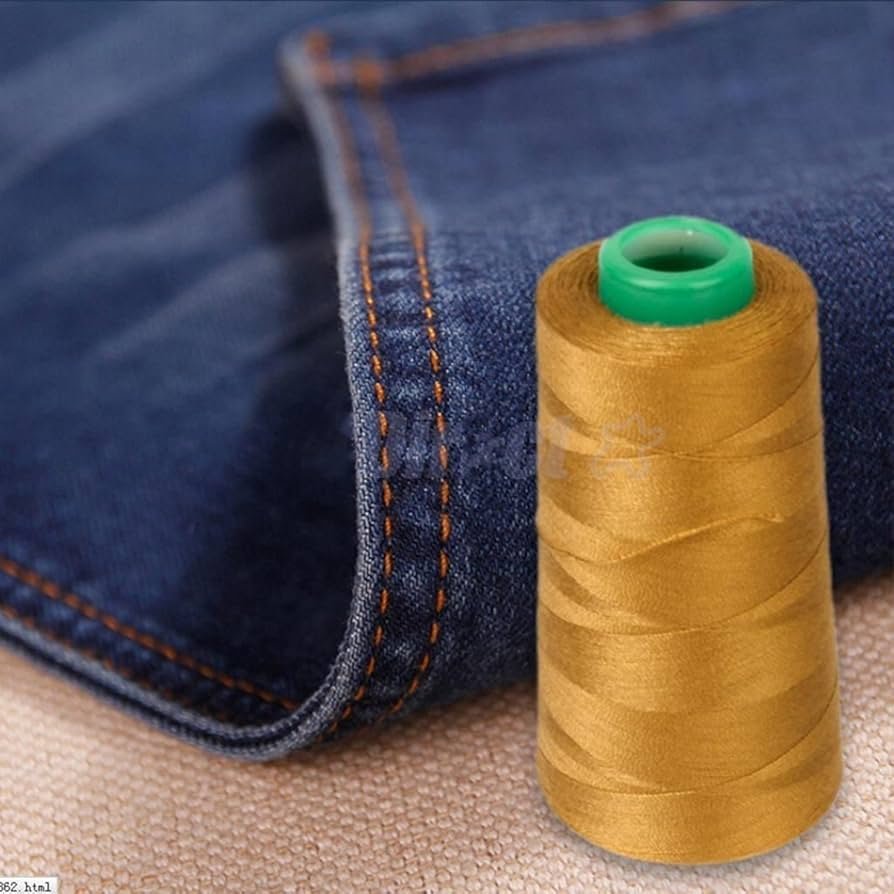
Orange and yellow threads were used historically to match copper rivets and contrast against indigo denim, becoming a brand signature.
Color Significance
- Orange = Levi’s tradition.
- Yellow = Heritage authenticity.
- Tonal = Modern minimalist look.
Our Insight
We offer custom thread dyeing to match client branding.
How does thread type impact sustainability?
Thread is part of eco responsibility.
Brands now seek recycled and organic options to reduce environmental impact in denim production.
Sustainable Thread Choices
- Recycled polyester (from PET bottles).
- Organic cotton sewing thread.
- Waterless dyed thread.
Our Insight
At Jeanzio, we integrate eco-certified thread options for clients aiming for sustainable collections.
What role does topstitching thread play?
It’s both strength and style.
Topstitching uses thicker, contrasting thread to reinforce seams and act as a visible design element.
Topstitching Details
- Double rows on inseams and waistbands.
- Pocket embroidery logos.
- Decorative fades over time.
Our Insight
We help clients design signature stitching patterns for pocket branding.
What should clients check when sourcing jeans thread?
Thread selection affects durability, cost, and brand identity.
Client Checklist
- Confirm fiber type (core-spun polyester, cotton, nylon).
- Select thread size (Tex rating) based on denim weight.
- Choose thread color aligned with branding.
- Test thread under industrial washing.
- Consider sustainable thread alternatives.
At Jeanzio
We provide thread libraries and sampling so clients can evaluate options before bulk production.
Conclusion
The best thread for jeans is usually core-spun polyester wrapped in cotton, chosen for strength, wash resistance, and authentic denim style.
Alternatives like pure cotton or nylon serve niche markets, while recycled and organic threads meet sustainability goals.
At Jeanzio, we guide clients in selecting thread that matches durability needs, fashion direction, and eco values, ensuring jeans stand out in quality and identity.