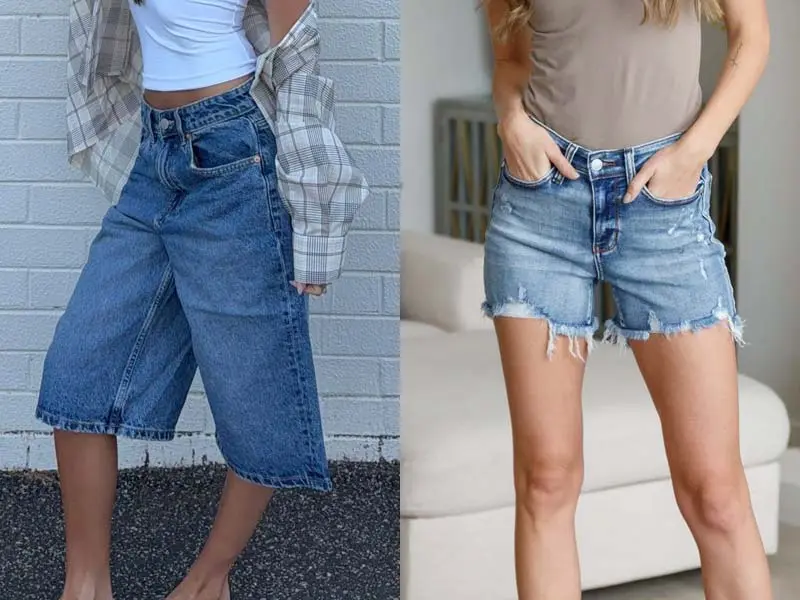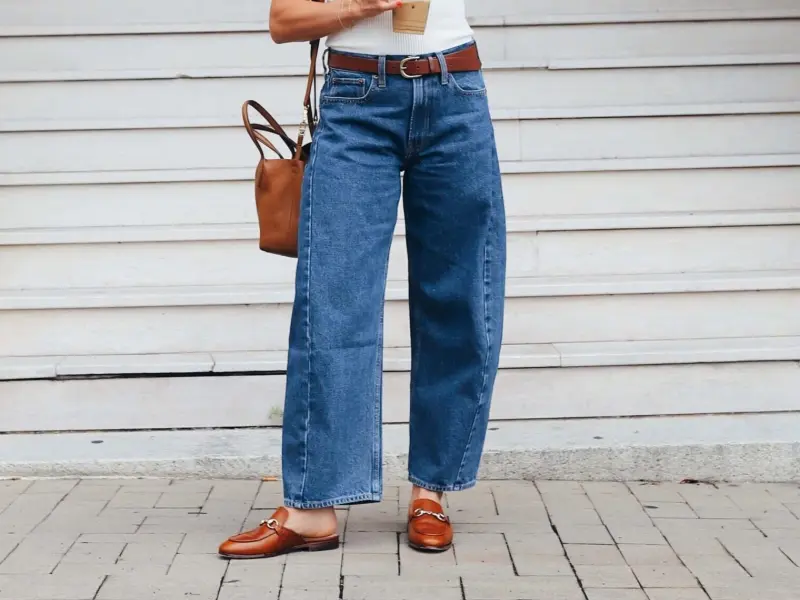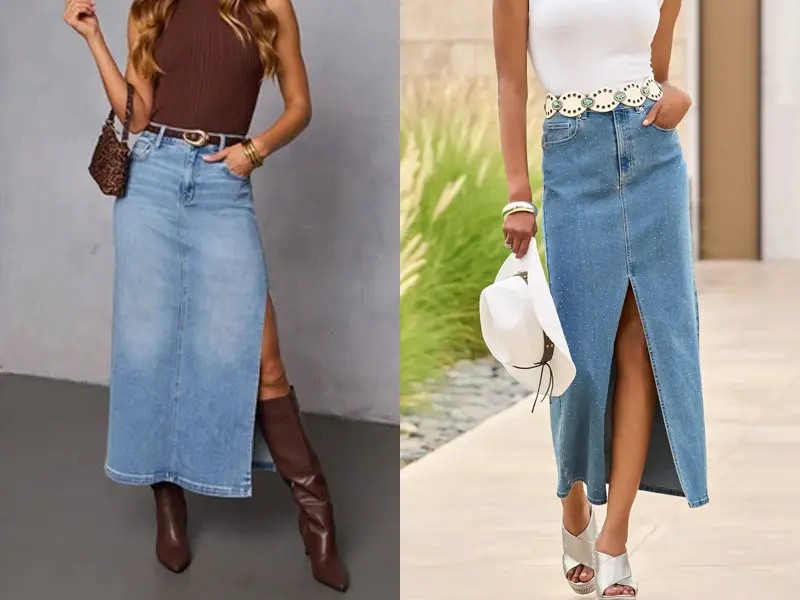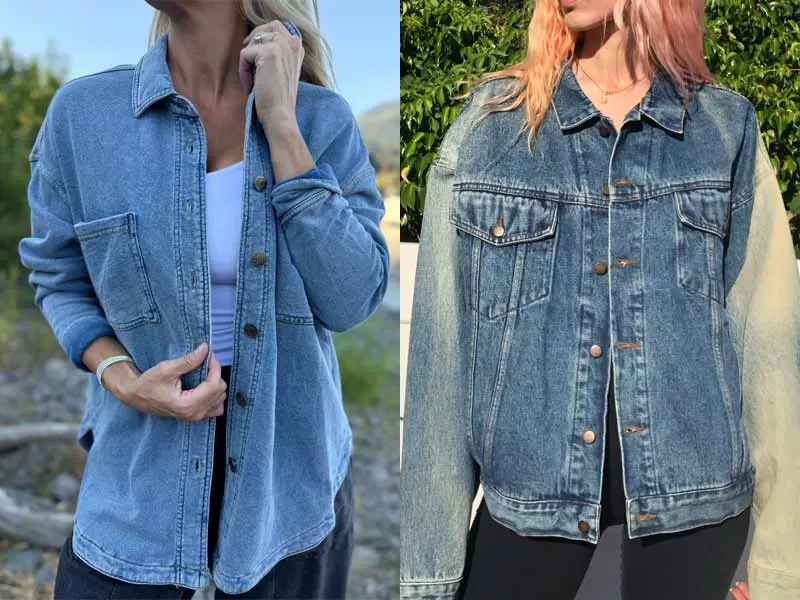
Denim shorts used to be a fairly simple category. A brand could take the familiar five-pocket jean, shorten the leg, choose a clean or frayed hem, and arrive at a recognizable summer product. That formula is much less reliable today. A pair ending near the knee can now sit beside a four-inch cutoff in the same assortment, yet the two garments create completely different proportions, fit expectations, styling possibilities, wash behavior, and commercial roles. The difference is not cosmetic. Once length changes, the product developer also has to reconsider rise, hip ease, thigh width, leg opening, pocket scale, hem treatment, and how the denim responds after washing.
Long denim shorts generally use a longer inseam, more thigh room, and a straighter or looser leg, while short cutoffs place the hem higher on the thigh and often rely on a raw or frayed finish. Neither style is automatically better. Long shorts favor coverage, relaxed proportions, and a modern jort or Bermuda direction, while short cutoffs favor leg exposure, compact proportions, and a familiar summer-denim look.
For shoppers, that sounds like a styling choice. For a brand, designer, or product developer, it becomes a product-engineering decision. A sample that looks right in a standing photo may climb during walking, feel tight when sitting, lose length after washing, or develop an uncontrolled fringe at the hem. The most successful denim shorts are therefore not the ones that simply copy the season’s visible silhouette. They are the ones in which length, fit, fabric, wash, and construction have been designed to work together from first sample through bulk production.
What Is the Difference Between Long Denim Shorts and Short Cutoffs?
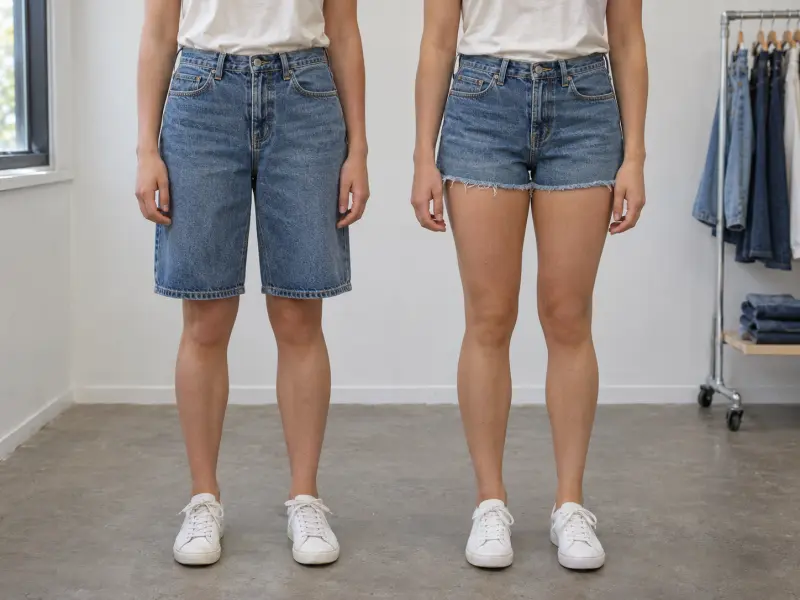
Long denim shorts are defined mainly by extended length and a fuller lower-leg silhouette, while short cutoffs place the hem higher on the thigh and often use raw or frayed finishing. The distinction is broader than length alone. Rise, hip ease, thigh width, leg opening, pocket proportion, wash placement, coverage, and hem construction all influence whether the finished garment reads as a jort, Bermuda short, classic cutoff, or something between them.
Long Denim Shorts
Long denim shorts usually extend from the lower thigh toward the knee, although there is no single inseam at which the category officially begins. In commercial development, many contemporary versions sit around 7 to 11 inches of inseam, with some knee-length designs extending beyond that range depending on wearer height, rise position, and intended styling. The extra length gives the garment more visual mass, so the leg shape becomes much more important than it is on a traditional short cutoff. A narrow opening can make a long short look stiff, while a wider straight opening can create the relaxed, almost cropped-jean effect associated with modern jorts.
The longer body also gives designers more room to express wash and construction details. Front-pocket scale, back-pocket placement, whiskering, hand scraping, fading, side-seam position, carpenter loops, cargo pockets, and raw-edge treatment are all easier to notice because there is more surface area below the hip. This is one reason long shorts can support many identities: a structured clean Bermuda, a baggy streetwear jort, a vintage carpenter short, or a fashion-led distressed style can share a similar inseam while feeling completely different. In development, the word “long” should therefore never replace actual measurements and a clear target silhouette.
A practical specification should define the intended finished inseam, rise, hip ease, thigh width, leg opening, and approximate hem position on the approved fit model. It is also useful to specify whether the leg should drop vertically, taper slightly, or flare away from the thigh. These points help the pattern maker understand the visual target before the first sample is cut. For brands working with JEANZIO on a new short program, a reference image becomes much more useful when it is paired with this type of measurable fit direction rather than being treated as the complete technical instruction.
Short Cutoffs
Short cutoffs usually finish on the upper or middle thigh and often carry the visual language of jeans that have been intentionally shortened, aged, or deconstructed. A raw edge, visible fraying, grinding, faded areas, local abrasion, and a familiar five-pocket structure can all reinforce that identity. In many women’s collections, roughly 2.5 to 5 inches of inseam will read as a short-cutoff direction, although rise and body height strongly influence the final appearance. A four-inch inseam on a high-rise pattern does not look or feel the same as the same inseam on a low-rise pattern.
The shorter the leg becomes, the more sensitive the garment is to small pattern changes. Removing half an inch from a 10-inch jort usually creates a modest visual shift. Removing half an inch from a 3.5-inch cutoff can materially change rear coverage, inner-thigh exposure, and the balance between front and back hem. Short cutoffs also concentrate most fit pressure around the waist, seat, crotch, and upper thigh. If the upper thigh is too tight, the hem can ride upward during walking. If the opening is too wide, the edge may flare away from the body or expose more than the design intended.
Raw hems deserve particular attention because their casual appearance can hide a surprisingly technical requirement. Production still needs boundaries for the cut line, fringe depth, side-seam finish, loose-thread length, and acceptable asymmetry. Denim will continue to release yarns under laundering and wear, so the development team has to decide how much growth is acceptable. A good cutoff looks naturally irregular; a poor one looks inconsistent from piece to piece. The difference is usually not creativity but whether the visual effect was translated into a controlled standard before bulk production.
Jorts, Bermudas, and Cutoffs
The terminology overlaps because each word describes a different part of the product. “Jorts” is a broad fashion term for jean shorts and is now strongly associated with longer, looser, knee-oriented silhouettes. “Bermuda shorts” describes a length direction that approaches the knee, but the fit can be clean, tailored, straight, or relaxed. “Cutoff” more often describes the shortened-jean aesthetic and commonly includes a raw or frayed hem. A long pair of shorts can therefore also be a cutoff, and a knee-length pair can be marketed as either a jort or Bermuda depending on its fit and styling.
| Attribute | Long Denim Shorts | Short Cutoffs |
| Typical inseam range | About 7-11+ in. | About 2.5-5 in. |
| Typical hem position | Lower thigh to knee | Upper to mid-thigh |
| Common fit | Straight, relaxed, baggy | Slim, straight, relaxed |
| Coverage | Medium to high | Low to medium |
| Common hem | Clean, raw, frayed, rolled | Often raw or frayed |
| Main visual feature | Length and leg shape | Leg exposure and hem treatment |
| Common fit risk | Excess bulk or narrow opening | Ride-up or insufficient coverage |
| Typical collection role | Trend/core crossover | Classic summer fashion |
The table is a useful starting point, but these categories should not become rigid design rules. A fitted long Bermuda and an oversized short cutoff can deliberately break the usual relationship between length and volume. The more useful question is what the garment is expected to do on the body. If the goal is coverage with a strong relaxed silhouette, the pattern has to create enough thigh and leg room. If the goal is a compact, leg-revealing cutoff, the pattern has to preserve movement and back coverage without losing the intended short proportion.
Which Inseam Defines Each Style?
No universal industry rule assigns one exact inseam to long denim shorts or short cutoffs. In practice, about 2.5-5 inches usually reads as a shorter cutoff, 5-7 inches as a mid-length short, and roughly 7-11 inches or more as a long-short or jort direction. The same inseam can still look different because rise, wearer height, leg opening, crotch depth, and total outseam change where the hem actually lands on the body.
Long-Short Inseams
A finished inseam around 7 inches often creates an accessible long-short proportion without reaching the strongest knee-length territory. Around 8 to 10 inches, the product usually begins to communicate a clearer jort or Bermuda silhouette, especially when paired with a straight or relaxed opening. Longer versions around 10 to 12 inches or more can reach or cross the knee on some wearers. These numbers are useful development references, but they are not definitions. A petite fit model and a tall fit model can experience the same nominal inseam very differently.
This is why professional development combines the measurement with a visual target. Instead of saying only “9-inch jort,” a clearer specification might state that the finished hem should sit approximately one to two inches above the kneecap on the approved fit model, with relaxed thigh volume and a straight opening. That description tells the pattern team what the number is intended to achieve. It also makes later size grading easier because the team can judge whether the silhouette is being preserved rather than blindly increasing every measurement according to a generic grade rule.
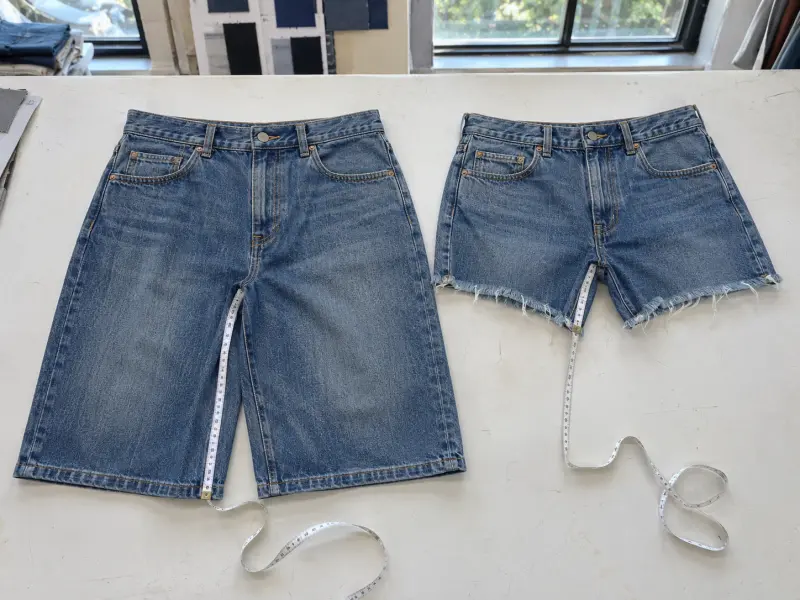
Outseam deserves the same attention. A high-rise short begins higher on the torso than a low-rise short, so two garments with identical inseams can have noticeably different total lengths and visual proportions. The position of the crotch also matters. A deliberately dropped or relaxed crotch increases the distance between waist and hem and can make the garment feel longer even when inseam is unchanged. In fit review, inseam should therefore be read together with rise, outseam, thigh width, and hem position rather than treated as a stand-alone number.
Short-Cutoff Inseams
Traditional short cutoffs often sit between approximately 2.5 and 5 inches of finished inseam. Around 3 to 4 inches creates the familiar upper-thigh cutoff look in many women’s size ranges, while 4.5 to 5 inches provides slightly more coverage and often feels easier to commercialize across a broader customer base. Below about 3 inches, the product becomes highly sensitive to back coverage, crotch balance, pocket-bag exposure, and hem angle. A visually small change can alter the wearing experience much more than the same change on a longer short.
For that reason, short styles should be reviewed while the fit model is moving, not only standing. Sitting can pull the back hem upward. A long walking stride can make a close thigh opening climb. Bending can reveal whether the back rise and seat coverage are adequate. Pocket bags can also become visible when a very short front hem is combined with a deep pocket design. These issues rarely appear in a flat sketch, and they may not be obvious in a single e-commerce-style fitting photo. They need to be tested deliberately during sampling.
The final washed inseam is more important than the pre-wash cut length. Denim can shrink after garment washing, and the percentage is affected by fabric construction, finishing history, wash route, drying conditions, and whether the fabric is rigid or stretch. A pattern team therefore needs shrinkage information before locking the production pattern. If the target finished inseam is four inches, the pre-wash pattern may need additional length so the garment finishes correctly after processing. The correct allowance comes from actual fabric and wash testing rather than a universal formula.
Hem Position and Coverage
Hem position changes both coverage and proportion. A short ending high on the thigh leaves more visible leg and creates a compact summer silhouette. A hem ending around mid-thigh feels more balanced and often works across a wider range of customers. Once the hem approaches the knee, the leg opening and the amount of fabric below the hip become visually dominant. At that point, the short begins to behave more like a cropped trouser or jean, and the designer has to consider knee movement, lower-thigh circumference, and the relationship between pocket placement and total garment length.
| Finished Inseam | Typical Visual Result | Coverage | Main Development Check |
| 2.5-3.5 in. | Very short cutoff | Low | Seat and inner-thigh coverage |
| 4-5 in. | Classic cutoff | Low-medium | Ride-up and thigh comfort |
| 5.5-7 in. | Mid-length short | Medium | Fit and coverage balance |
| 7.5-9 in. | Long denim short | Medium-high | Leg opening and straight hang |
| 9.5-12+ in. | Jort/Bermuda direction | High | Knee position and overall volume |
These ranges should be treated as practical reference points rather than fixed fashion standards. A brand developing its own signature fit should build a consistent measurement language across seasons. If a successful five-inch short is already established, a new long version does not necessarily need a completely unrelated block, but the leg must still be rebalanced. Likewise, a successful 10-inch jort cannot simply be chopped to four inches without checking seat coverage and upper-thigh geometry. Length changes what the pattern needs to accomplish.
How Do Fit, Rise, and Leg Opening Differ?
Long denim shorts generally need more deliberate thigh and leg-opening volume so the extended leg can hang cleanly, while short cutoffs rely more heavily on accurate waist, hip, seat, and upper-thigh balance. Rise changes the visual proportion of both styles, and leg opening determines whether the garment hangs straight, feels restrictive, flares outward, or rides upward. These measurements should be developed as a connected system rather than adjusted independently.
Fit and Ease
A relaxed jort is not created by simply adding several inches to the bottom of an ordinary short. The extra ease has to be distributed through the hip, seat, thigh, and leg opening so the fabric falls naturally. If only the hem is widened while the upper thigh remains narrow, the result can look unintentionally flared. If the entire lower body is widened without reviewing crotch balance and seat volume, the garment can look oversized rather than deliberately relaxed. The best long-short patterns establish a clear line from the hip through the hem so the silhouette reads correctly from front, side, and back.
Short cutoffs concentrate most of the fit challenge above the hem. Waist circumference, hip curve, front and back rise, seat shape, and upper-thigh circumference all have a direct effect on comfort because there is very little leg length available to absorb imbalance. A tight thigh can pull the short upward, while an overly loose seat can collapse beneath the back yoke. On a very short style, even the angle of the hem from side seam to inseam can influence how much coverage the garment provides during movement.
Fabric stretch changes how much mechanical ease the pattern requires. Rigid denim usually needs enough physical room for sitting and walking because the fabric does not extend much under body movement. Comfort-stretch denim can allow a closer fit, but stretch should not be used to hide a poorly balanced pattern. If the fabric has weak recovery, the seat or leg opening may bag after wear. Pattern decisions therefore need to account for both initial stretch and recovery after repeated extension, not merely the elastane percentage printed on the fabric specification.
Rise and Body Proportion
Rise determines where the waistband sits and how the garment is divided between waist, crotch, and leg. A high-rise short usually creates stronger waist definition and a longer visual front body. When combined with a short inseam, it produces the familiar high-waisted vintage-cutoff proportion. A mid-rise tends to be more neutral and widely wearable. A low-rise long short creates a very different attitude because the waistband drops toward the upper hip while the extended leg remains visually heavy, producing a more relaxed or streetwear-influenced silhouette.
Changing rise is not as simple as moving the waistband line up or down on the pattern. Lowering the rise changes the body circumference at which the waistband must fit, affects fly length, alters the relationship between front and back crotch, and can require changes to yoke shape and pocket position. Raising the rise can introduce gaping at the back waist or pressure at the abdomen if the upper pattern is not reshaped. The side seam is a useful diagnostic tool because a seam leaning forward or backward often reveals imbalance between front and back pattern volume.
Fit teams should evaluate rise visually and functionally. A short may technically meet the measurement chart yet still look wrong if the waistband does not sit at the intended body position or the crotch appears too long. During approval, it helps to record both the numeric front and back rise and the intended wearing position. This gives the pattern maker, sample room, and later production team a clearer shared reference, especially when the brand uses words such as high, mid, or low rise differently from another label.
Leg Opening and Movement
Leg opening is one of the most underestimated measurements in shorts because its effect is both visual and functional. On a long jort, a generous opening allows the leg to fall straight instead of catching on the lower thigh. If the opening is too narrow, walking can push the fabric upward and create folds around the crotch or front thigh. On a structured Bermuda, the opening may be intentionally closer, but it still has to allow sitting, stair climbing, and normal stride without pulling the waistband downward.
On short cutoffs, the opening controls whether the hem hugs the thigh, floats away from it, or flares outward. A small circumference can create a fitted, body-conscious result but may increase ride-up. A larger circumference improves freedom but can change the style dramatically, especially when the hem is only three or four inches below the crotch. For this reason, it is useful to fit the garment with the target footwear and styling when possible, because a short intended for fitted tops and heels may be balanced differently from one designed for oversized tees and sneakers.
A simple movement test catches many problems before production. The model should stand naturally, sit for at least half a minute, walk, take a longer stride, climb stairs, and bend forward while the team checks the front, side, and back hem positions. The same test should be repeated after the intended wash. Denim often becomes softer, shorter, or more flexible after processing, and those changes can improve or worsen the fit. A sample that only looks good before washing is not yet a reliable production reference.
Which Denim Fabric, Wash, and Hem Work Best?
Rigid or low-stretch denim usually works best when long shorts need structure and a clean leg shape, while comfort-stretch denim can improve movement in closer-fitting cutoffs. Light to medium denim weights are common for warm-weather products, but fabric weight alone does not predict performance. Wash and hem must be developed together because abrasion, enzymes, laundering, and drying affect shade, shrinkage, hand feel, strength, and raw-edge fraying.
Rigid and Stretch Denim
Rigid denim is often the strongest choice when the design depends on a clear silhouette. Straight long jorts, baggy shorts, carpenter styles, structured Bermudas, and vintage-inspired cutoffs all benefit from fabric that can hold shape rather than collapsing around the leg. Traditional rigid denim is commonly close to 100 percent cotton, but some fabrics with a small stretch component can still deliver a relatively rigid visual character. The choice should be based on how the finished fabric behaves after washing, not only on the fiber-content line in the specification.
Comfort stretch becomes useful when the garment sits closer to the body or when the customer expects more mobility. A small elastane content, often around 1 to 2 percent in many commercial denim constructions, can noticeably improve comfort around the hip and thigh. That does not mean more elastane is always better. High extension with weak recovery can create bagging at the seat, waistband, or leg opening after repeated wear. A reliable fabric review therefore looks at extension, recovery, hand feel, growth, and dimensional change after wash rather than treating stretch percentage as the only performance indicator.
The safest development sequence starts with silhouette. A baggy knee-length jort may need enough body to keep the leg from collapsing inward. A fitted high-rise cutoff may need controlled stretch to move with the wearer. A soft summer short may benefit from a lighter cotton or cotton-cellulosic blend. A heavily distressed design needs enough remaining fabric strength around the damaged areas to survive laundering and wear. Once the visual target is clear, fabric can be chosen for the behavior the pattern actually needs.
Denim Weight and Hand Feel
Denim weight is commonly expressed in ounces per square yard, and many fashion shorts fall somewhere around 8 to 13 ounces, although products outside that range are entirely possible. Lightweight denim around 7 to 9 ounces can work well for soft summer shorts and relaxed shapes where drape is desirable. Midweight denim around 9.5 to 12.5 ounces gives many five-pocket shorts enough structure to look like authentic jeans while remaining practical for warm-weather use. Heavier denim above roughly 13 ounces can create a strong, premium structure but may feel excessive in a very short, fitted silhouette.
Weight should never be evaluated by number alone. Two fabrics labeled 11 ounces can behave differently because yarn size, weave density, fiber blend, finishing, resin treatment, and wash route all affect stiffness and drape. A fabric that feels firm in the roll may soften dramatically after enzyme or stone washing. Another may remain dry and structured after a light rinse. For long shorts, the development team should check whether the fabric maintains the intended leg line. For short cutoffs, comfort at the seat and upper thigh often matters more than dramatic structure.
Hand feel also influences perceived value. A vintage jort can look heavily worn yet still feel comfortable against the skin if washing and finishing are controlled properly. Conversely, an attractive light wash can feel harsh if the finishing route leaves the fabric dry or stiff. Brands should approve shade and hand feel together rather than treating them as separate checkpoints. When a wash is changed to reach a lighter color, the team should recheck shrinkage, seam appearance, strength, and touch because the additional processing can affect all of those characteristics.
Wash and Surface Effects
Wash can transform the same pattern into several completely different products. A clean dark rinse creates a sharper, more minimal short and usually keeps surface variation low. Mid-blue washes are flexible and can support both core cutoffs and long casual shorts. Light washes work naturally in spring and summer assortments, while vintage and worn-in directions use fading, whiskering, grinding, hand scraping, laser effects, and local abrasion to create more character. The design question is not simply which wash looks attractive, but whether the chosen effect can be repeated consistently across the intended order size.
Distressed details should be converted into measurable references. A note such as “small rip on left thigh” leaves too much interpretation open. A stronger specification identifies the approximate position from a stable seam or point of measurement, the target width and height, the intensity of abrasion, whether backing or reinforcement is required, and how much variation is acceptable. This allows the bulk team to preserve a natural look without letting every operator create a different garment. The same principle applies to whiskers, fading zones, grinding at pocket edges, and local color contrast.
Wash approval should also include post-wash measurements. Stronger laundering can change inseam, rise, leg opening, seam puckering, and the way the leg falls. A fit sample approved in unwashed fabric is therefore only an interim step. The finished wash sample needs to be measured and fitted again. When JEANZIO reviews a wash-driven short, the practical target is not only to match a color photograph but to confirm that shade, hand feel, shrinkage, distress placement, and final silhouette are working together as one approved standard.
Raw and Finished Hems
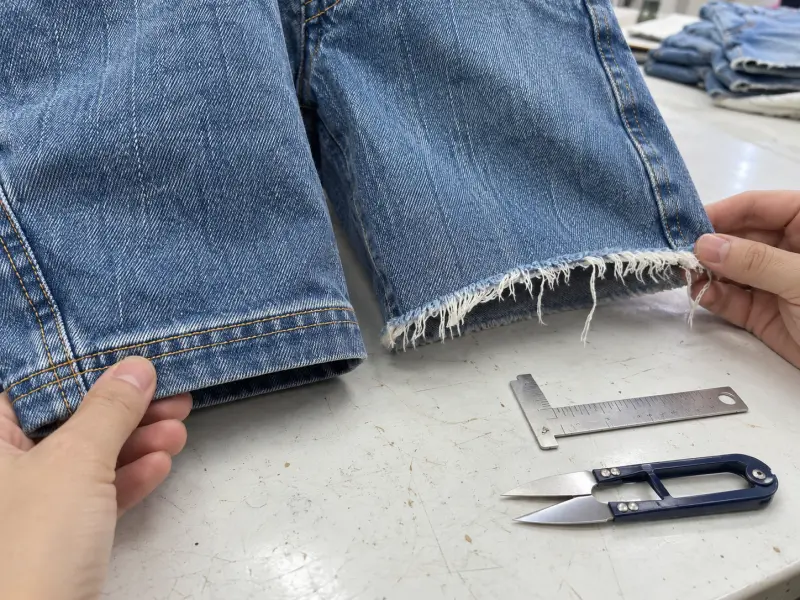
Raw hems are strongly associated with cutoffs, but they are now common on long jorts and Bermuda-length denim as well. The appearance is created by exposing yarns at the cut edge and then controlling how those yarns release during washing and finishing. The final fringe depends on weave structure, yarn size, wash intensity, mechanical abrasion, and trimming. A fabric that creates a soft, even fringe in one wash route may produce a much more aggressive edge under another, so the hem should be developed with the actual bulk wash rather than on an unrelated sample.
A production-ready raw-hem specification can define the final washed hem position, approximate fringe-depth range, maximum loose-thread length, side-seam treatment, whether a securing stitch is required above the edge, and the amount of acceptable irregularity. These controls do not make the garment look artificial. They protect the intended casual character by preventing extreme differences from one piece to another. If the design includes grinding or local tears near the edge, those effects should also be reviewed for fabric strength because the combination of distressing and repeated laundering can accelerate damage.
Finished hems offer greater dimensional stability and usually create a cleaner, more polished appearance. They work well for refined Bermuda shorts, premium minimal collections, workwear-inspired products, and styles where the fabric and fit are intended to carry the design instead of visible distress. Rolled or turned cuffs introduce another variable because cuff depth, seam bulk, and pressing need to remain stable after wash. The correct hem should therefore support the product’s styling, fabric weight, wash, price positioning, and expected repeatability rather than being chosen simply because one finish is currently more fashionable.
Which Style Fits Current Denim Collections?
Long denim shorts fit collections that need relaxed proportion, more coverage, and a directional jort or Bermuda silhouette, while short cutoffs remain strong for classic summer, festival, resort, and youthful denim programs. The two styles do not need to compete for the same role. A balanced collection can use longer shorts for fashion momentum and styling versatility while keeping short cutoffs as familiar, repeatable seasonal products.
Long Shorts as a Fashion Silhouette
The current appeal of longer denim shorts is connected to the wider shift toward relaxed denim proportions. Consumers who already wear wide-leg, baggy, carpenter, and loose straight jeans are more prepared to accept additional fabric volume in shorts. Long jorts bring the same visual language into warmer weather, giving brands a way to continue an established denim direction rather than switching abruptly to a much smaller, tighter summer bottom. The extra coverage also expands styling possibilities because the garment can be paired with fitted tops, oversized shirts, tailoring, sneakers, sandals, or boots without relying on the exposed-leg effect of a short cutoff.
The most commercially useful lesson is not that every brand needs an extreme knee-length jort. The trend can be interpreted at several levels. A fashion-led label may choose a 10 to 12-inch baggy fit with a low or mid rise. A more mainstream collection may use a 7 to 9-inch straight short that still feels current without overwhelming the wearer. A premium customer may prefer a cleaner Bermuda with restrained washing and a finished hem. The shared elements are longer proportion, controlled thigh ease, and a deliberate leg shape, not one universal pattern.
Brands should also consider how the short connects with the rest of the collection. A relaxed long short works naturally beside wide-leg jeans, oversized jackets, carpenter details, and authentic vintage washes. If the brand’s existing denim language is very slim, polished, and body-conscious, an exaggerated baggy jort may feel disconnected even if it is fashionable elsewhere. Trend adoption is strongest when the new product can be translated through the brand’s established fit, wash, and styling language instead of being copied as an isolated seasonal item.
Short Cutoffs as a Core Summer Product
Short cutoffs remain commercially relevant because their product meaning is immediately familiar. A short inseam, five-pocket construction, vintage wash, and frayed edge communicate summer denim without requiring the customer to understand a new silhouette. They work naturally for vacation, festival, warm-climate, beach, and casual collections, and they pair easily with cropped tops, tanks, shirts, light knitwear, sneakers, sandals, and boots. That familiarity gives them a different kind of value from a directional long jort: they may generate less novelty, but they can serve as dependable seasonal volume when the fit is proven.
A successful cutoff block can also be refreshed without being rebuilt every season. The same core fit may support a dark rinse, mid-blue vintage wash, light wash, black denim, white denim, mild abrasion, stronger distressing, a clean hem, or a controlled raw edge. This approach reduces development risk because the brand already understands how the waistband, rise, hip, and thigh fit its customer. Wash and surface changes can then create newness while the core geometry remains relatively stable. When the fabric changes substantially, however, the block still needs to be rechecked because stretch, shrinkage, and drape can alter the fit.
Short cutoffs are especially useful when a brand’s customer is not ready for a pronounced long-short silhouette. Fashion media may move quickly, but customer adoption varies by region, age group, channel, styling culture, and price point. A retailer with proven sales history in four- or five-inch shorts should not abandon that evidence simply because longer jorts are visible in trend coverage. The stronger approach is to test a long silhouette as an additional option while protecting the core product that already has a reliable fit and repeat demand.
Core and Trend Roles
A useful assortment separates core products from directional ones. Core shorts should be repeatable across washes and seasons, easy for returning customers to recognize, and stable enough to reorder without extensive redevelopment. Trend shorts can carry more aggressive length, volume, wash, or construction details because their role is to create freshness and help the collection feel current. In practice, the best mix depends on sales history, customer profile, climate, channel, and the rest of the seasonal line rather than a universal percentage formula.
Collection efficiency also improves when several denim products share a compatible fabric and wash platform. A mid-blue fabric, for example, may support a straight jean, long short, jacket, and skirt if each pattern is developed for its own structure and all styles can accept the same wash route. Shared hardware and trim families can reduce unnecessary sourcing complexity as well. The visual benefit is equally important: customers see a coordinated denim story instead of unrelated products that happen to use similar blue fabric.
A brand deciding between long shorts and cutoffs should review the intended customer, selling season, climate, established fit language, planned tops and outerwear, and the role of the SKU in the assortment. A long short makes sense when the customer values coverage and relaxed proportion. A cutoff makes sense when exposed leg and classic summer attitude are part of the brand’s identity. Offering both can be effective when each one solves a different styling or commercial need rather than duplicating the same product at two arbitrary lengths.
How Do Brands Develop Denim Shorts for Bulk Production?
Reliable bulk production begins by translating a visual idea into measurable standards before cutting starts. Pattern measurements, fabric specifications, shrinkage, wash shade, distress placement, hem treatment, hardware, and approved samples should all become production references. The most dependable shorts are not simply attractive prototypes. They are products whose fit, surface effects, and construction can be checked repeatedly across sizes, fabric lots, wash batches, and reorder cycles.
Measurement Control
A denim-short measurement chart needs to control more than waist and inseam. Waist, hip, front rise, back rise, thigh, inseam, outseam, and leg opening form the basic geometry, while designs may also require waistband height, yoke depth, fly length, pocket opening, pocket position, side-seam length, cuff depth, or hem angle. The shorter the style, the more important rear coverage and upper-thigh balance become. The longer the style, the more important leg shape, knee relationship, and lower-thigh opening become. Each measurement should therefore connect to a visible or functional requirement.
Wash shrinkage has to be built into the pattern-development process. If the finished target is a nine-inch inseam and the approved wash removes length, the pre-wash pattern needs enough allowance to finish at the correct measurement. The same applies to rise, thigh, and leg opening. The right compensation cannot be taken from a generic denim rule because different fabrics and wash routes behave differently. Development samples should be measured before and after wash so the pattern team can use actual dimensional change rather than assumptions when the production pattern is finalized.
Size grading should preserve silhouette, not just increase numbers. A larger size may need additional hip and thigh ease while the leg opening grows at a different rate. Pocket position also needs to remain visually balanced as the body becomes wider. On a long jort, an unchanged pocket can look too small in larger sizes; on a very short cutoff, moving the pocket incorrectly can affect coverage. A good grading review therefore compares front, side, and back photographs or fittings across key sizes rather than relying only on a measurement spreadsheet.
Raw-Hem and Wash Standards
Visual denim effects are difficult to control when approvals remain subjective. Phrases such as “light vintage,” “natural distress,” or “soft fray” are useful for creative discussion, but bulk production needs physical or visual references and acceptable limits. A raw hem can be controlled by recording the finished cut position, expected fringe zone, maximum loose-thread length, and side-seam treatment. A thigh abrasion can be referenced by location, approximate dimensions, intensity, and whether the underlying fabric needs reinforcement. This turns an artistic direction into a standard that different workers can reproduce.
Wash approval benefits from the same discipline. The brand should define a target shade, overall contrast level, hand feel, key fading zones, and the acceptable amount of garment-to-garment variation. A shade band can be useful for washes in which small natural differences are expected, because it defines the acceptable visual window instead of pretending every garment will be identical. The development team should also confirm how the wash affects shrinkage and seam appearance. A visually accurate color is not enough if the garment finishes shorter, twists at the leg, or becomes too soft to hold its intended shape.
The goal is controlled variation, not mechanical sameness. Denim is attractive partly because washing creates natural surface differences, and overly rigid control can make an authentic vintage product look artificial. The practical task is to distinguish acceptable character from a defect. A few millimeters of fringe variation may be harmless, while a hem that grows far beyond the approved zone can change the product’s length. A small shade shift may be acceptable within an approved band, while a clearly different front panel or pocket shade can look like a production mistake.
Sample-to-Bulk Control
Each sample stage should answer a different question. The first sample establishes whether the design has been translated into the correct basic silhouette and construction. A fit revision closes issues in rise, hip, thigh, length, pocket placement, or leg opening. A wash sample establishes shade, hand feel, shrinkage, and surface effects. A pre-production sample then brings the approved pattern, fabric, trims, construction, wash, and finishing together in a form that can serve as the closest reference for bulk manufacturing. Treating all of these as one generic “sample” often creates confusion later.
For a long jort, the first sample may reveal that the leg is too narrow or the back pocket looks too small against the extended body. After washing, the same style may lose enough length to move the hem higher than intended or become so soft that the leg collapses. A short cutoff can create the opposite problems: standing fit may look acceptable, but sitting reveals insufficient back coverage, or the raw edge grows more than expected after wash. These are exactly the kinds of issues that sampling is supposed to expose before production quantities make correction expensive.
Version control is equally important. The approved pattern, measurement chart, fabric article, trim list, wash reference, distress placement, and PP sample should all correspond to the same final version. If the customer changes the inseam after wash approval or substitutes a fabric after fit approval, the impact on the other standards needs to be reviewed. JEANZIO’s most useful role in this type of project is not simply producing another sample quickly, but helping keep pattern, fabric, wash, and production decisions connected so that one late change does not quietly create several new risks.
Bulk Consistency
Bulk denim shorts can vary through more than sewing. Fabric lots, shrinkage, wash loading, chemical conditions, mechanical abrasion, drying, trimming, pressing, and operator handling can all affect the finished product. Incoming fabric should therefore be checked before cutting, especially for visible defects, shade grouping, usable width, and relevant shrinkage behavior. Cutting should follow the approved pattern and fabric direction, and sewing controls should focus on areas such as waistband shape, pocket placement, crotch balance, inseam, side seam, fly, bartacks, and hardware before garments move into wash.
After wash, the product should be measured again because this is when the true finished fit appears. Shade, hand feel, twisting, seam puckering, raw-edge behavior, distress position, and overall appearance also need review at this stage. Final inspection then compares the shipment with the approved production standard rather than with an early reference image. This distinction matters because a fashion image can communicate mood and proportion, but it cannot independently define the tolerances needed to reproduce thousands of garments consistently.
| Control Point | What Should Be Confirmed | Common Risk if Missed |
| Pattern | Rise, hip, thigh, inseam, opening | Fit drift or wrong silhouette |
| Fabric | Composition, weight, stretch, shrinkage | Different hand feel or dimensions |
| Construction | Seams, pockets, waistband, fly | Appearance and durability variation |
| Wash | Shade, contrast, hand feel | Batch-to-batch mismatch |
| Distressing | Position, size, intensity | Random visual variation |
| Raw hem | Cut line, fringe zone, stability | Excess fraying or length change |
| PP reference | Complete approved combination | Teams work from different versions |
| Final QC | Measurements and appearance | Defects reach shipment stage |
For brands developing a new denim-short program, it is usually more productive to send the manufacturer a reference image together with the target customer, desired inseam, rise direction, expected fit, wash reference, size range, and approximate order structure. That information allows the development team to judge fabric suitability, pattern requirements, wash risk, and production feasibility before too much time is spent refining the wrong construction. It also creates a cleaner path from first sample to repeat order because the decisions behind the product are documented instead of being held only in a photograph.
Conclusion
Long denim shorts and short cutoffs are both useful products, but they solve different fit and styling needs. Long shorts work best when a collection wants greater coverage, a relaxed contemporary silhouette, and more visual space for denim wash or utility details. Short cutoffs remain strong when the customer wants exposed leg, compact summer proportion, and the familiar attitude of raw-edge denim. The better product is not determined by which inseam appears most often in trend images. It is determined by whether the length, rise, hip ease, thigh shape, leg opening, fabric weight, wash, and hem treatment make sense together for the intended wearer and the intended collection.
From a development standpoint, the biggest mistake is treating length as an isolated adjustment. A four-inch cutoff and a ten-inch jort may start from the same broad five-pocket family, but they should not be expected to share identical fit logic. Each one needs its own balance of coverage, ease, movement, fabric behavior, and wash control. When those decisions are translated into measurable standards and locked through sampling, the design becomes easier to reproduce in bulk, easier to grade across sizes, and easier to reorder without starting from zero. That is where good denim development turns a seasonal idea into a commercially dependable product.
Frequently Asked Questions
Are jorts the same as long denim shorts?
Jorts and long denim shorts overlap, but they are not perfect synonyms. “Jorts” literally refers to jean shorts and can technically describe many lengths, although current fashion usage often points to relaxed, longer styles that finish near the lower thigh or knee. “Long denim shorts” is more directly a length description and can include baggy jorts, clean Bermudas, carpenter shorts, or other silhouettes. The fit, rise, leg opening, and hem treatment determine the more precise product identity.
What inseam is best for women’s long denim shorts?
There is no single best inseam because wearer height, rise, styling, and intended coverage all change the result. As a practical starting point, roughly 7 to 9 inches creates a wearable long-short proportion for many collections, while 9 to 12 inches or more moves toward a stronger jort or Bermuda look. Brands should fit the actual garment on their target size rather than selecting inseam from a trend image alone, especially when the hem is intended to sit close to the knee.
What inseam is common for short denim cutoffs?
Many classic women’s cutoffs fall around 2.5 to 5 inches of finished inseam, with approximately 3 to 4 inches creating a familiar upper-thigh look. The number should be treated as a reference rather than a rule because high-rise and low-rise patterns create different total proportions. Very short styles also need more careful review of back coverage, thigh opening, pocket-bag visibility, and movement because relatively small changes in length can have a large effect on comfort and exposure.
Is rigid denim or stretch denim better for shorts?
Rigid denim is usually better when the design depends on a clear, structured leg shape, such as straight jorts, carpenter shorts, or vintage cutoffs. Stretch denim can be more comfortable in closer-fitting shorts because it provides additional movement around the hip and thigh. Neither option is automatically superior. The best choice depends on the target silhouette, fabric weight, recovery, wash route, and finished hand feel, and the sample should always be tested after the intended wash before the fabric is approved for bulk.
How can brands stop raw denim hems from fraying too much?
Raw hems are controlled by defining the cut position, wash process, fringe-depth range, side-seam treatment, loose-thread trimming, and, where appropriate, a securing stitch above the edge. The fabric construction matters because some denims release yarns more aggressively than others. Brands should approve the raw hem after the actual wash rather than judging only the freshly cut sample. Bulk inspection can then compare the finished fringe with an approved visual reference and tolerance instead of relying on subjective judgment.
Which style is more suitable for a modern denim collection?
A modern collection can successfully use both. Long denim shorts are useful for relaxed silhouettes, coverage, streetwear influence, and the current jort or Bermuda direction. Short cutoffs remain valuable for classic summer, resort, festival, and youthful styling. The more useful decision is to assign each SKU a clear role. A proven cutoff can remain a core seller, while a long short adds newness. The two should not be forced to compete if they address different customers, outfits, or seasonal needs.
What should a brand provide before developing denim shorts with a manufacturer?
A strong starting package includes a reference image or sketch, target inseam, rise direction, fit description, size range, fabric preference, wash reference, hem treatment, key measurements, trim requirements, and approximate order quantity. A complete tech pack is helpful but not always necessary at the first discussion. The important point is to communicate the intended silhouette and commercial constraints clearly enough for the development team to review pattern, fabric, wash, and production feasibility before the first sample is made.