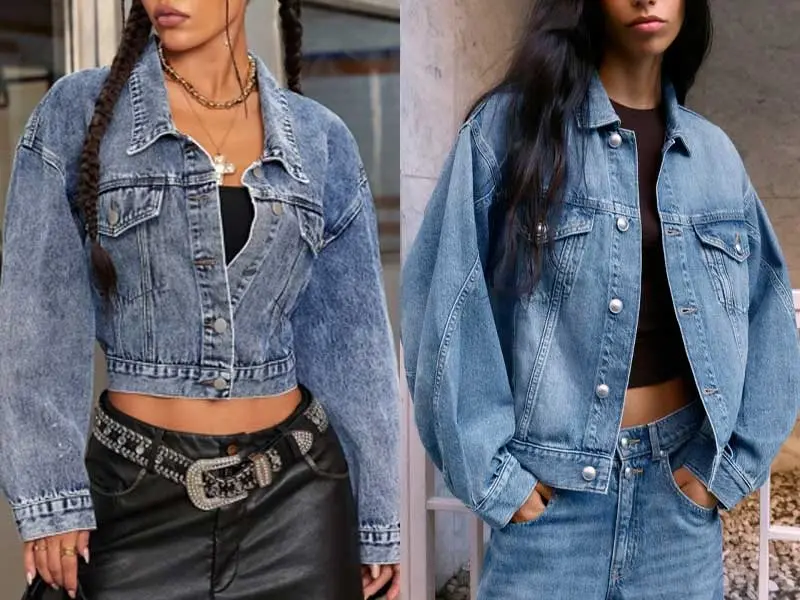
A denim jacket can look almost identical to another one on a hanger and feel completely different once it is worn. Move the hem upward and the waist becomes part of the styling. Add more shoulder width, chest ease and sleeve volume and the same basic jacket suddenly feels relaxed, street-led and much easier to layer. That is the real value of comparing cropped and oversized fits: the choice is not simply about which trend looks newer. It is about how length, volume, fabric and styling work together on an actual body and inside an actual wardrobe.
A cropped denim jacket is usually better when you want a visible waist, shorter upper-body proportion and an easy match with high-rise bottoms or dresses. An oversized denim jacket is usually better when you want relaxed volume, more room for sweaters or hoodies and a looser outer silhouette. Neither fit is universally better, and a jacket can be both cropped and oversized because length and volume are separate design decisions.
Once those two design decisions are separated, the comparison becomes much more useful. A cropped jacket can be fitted, boxy or oversized. An oversized jacket can be waist length, hip length or longer. Even two jackets with similar measurements can behave differently after washing because rigid denim, soft denim and different wash treatments change drape and handfeel. The sections below look at the choice from the same practical angles used in real denim development: proportion, body shape, layering, fabric behavior, wash response and the steps needed to carry a good sample into consistent production.
What Is the Fit Difference?
A cropped denim jacket is defined mainly by shorter body length, while an oversized denim jacket is defined by increased volume through the shoulder, chest, armhole and sleeves. They are not true opposites: cropped describes length, while oversized describes ease and overall silhouette. A jacket can therefore be cropped and oversized at the same time when its proportions are intentionally developed rather than simply shortened or sized up.
Cropped Fit
The most important measurement on a cropped denim jacket is not simply its total body length. What matters is where the hem lands in relation to the wearer’s natural waist, bust, torso length and the rise of the bottoms worn underneath. A jacket ending close to the waist creates a noticeably different visual effect from one ending at the upper hip, even though both may be marketed as cropped. The same short length can also support very different shapes, from a close trucker fit to a wider boxy fashion silhouette.
Shortening a conventional trucker pattern without reviewing the rest of the garment is one of the easiest ways to make a cropped jacket look accidental. Once the body is shortened, chest pocket placement, pocket size, bottom-button spacing, back-yoke depth, hem width and front-to-back balance may all need attention. Denim wash adds another variable because finished body length can change after processing. For a production-ready crop, the approved measurement needs to reflect the finished, washed garment rather than only the pre-wash sewing sample.
Oversized Fit
A true oversized denim jacket is deliberately patterned with additional room; it is not simply a regular jacket purchased two sizes larger. An intentional oversized block may use a wider or dropped shoulder, more half-chest, a deeper armhole, additional bicep width, a fuller sleeve and a broader hem. Those changes need to work together. If only chest width is increased, the garment often looks boxy rather than intentionally oversized, and if shoulder width grows without correcting sleeve length, the cuff can sit far beyond the intended hand position.
Scale also affects details that are easy to overlook. Standard chest pockets may appear too small on a broader front body, a conventional collar can look visually weak against a large shoulder line, and cuff proportions may feel undersized on a wide sleeve. The goal is therefore not maximum looseness but controlled volume. A good oversized fit still has clear balance from shoulder to hem, and that balance must suit the fabric. Firm rigid denim displays volume very differently from a softened or lightweight denim, even when both jackets share a similar chest measurement.
Cropped and Oversized Together
A cropped oversized denim jacket combines short body length with deliberate upper-body volume. This hybrid has become commercially useful because it keeps the relaxed shoulder and sleeve shape of an oversized jacket without covering as much of the waist or hip. It can work especially well with high-rise jeans, skirts, fitted dresses and wide-leg trousers, where the short hem preserves lower-body proportion while the upper section still feels relaxed. The result is visually different from both a fitted crop and a long oversized trucker.
The hybrid also creates technical challenges. A very short body combined with a very deep armhole can become almost square, while a wide hem in stiff denim may stand away from the body more than expected. Pocket location becomes more sensitive because there is less vertical space between the chest and hem. The practical approach is to evaluate length, width and volume distribution as one system. The silhouette should be approved through measurable points, not just comments such as ‘more cropped’ or ‘more oversized,’ so the same idea can be repeated across sizes and bulk production.
| Fit Variable | Cropped Jacket | Oversized Jacket | Cropped Oversized |
| Body length | Shortened | Regular to long | Shortened |
| Shoulder line | Natural to slightly extended | Extended or dropped | Usually extended or dropped |
| Chest ease | Low to moderate | Moderate to high | Moderate to high |
| Sleeve volume | Slim to relaxed | Relaxed to wide | Usually relaxed to wide |
| Waist visibility | High | Low to medium | High |
| Layering capacity | Low to medium | High | Medium to high |
| Main visual effect | Raises the waist break | Adds upper-body volume | Short length plus relaxed volume |
Which Fit Suits Each Body Type?
Cropped jackets often suit people who want stronger waist definition and more visible leg proportion, while oversized jackets suit people who prefer relaxed volume or extra layering space. Height alone does not decide the better fit. Torso length, shoulder width, bust, hip proportion, sleeve reach and the rise of the bottoms worn with the jacket usually have a bigger influence on whether the silhouette feels balanced.
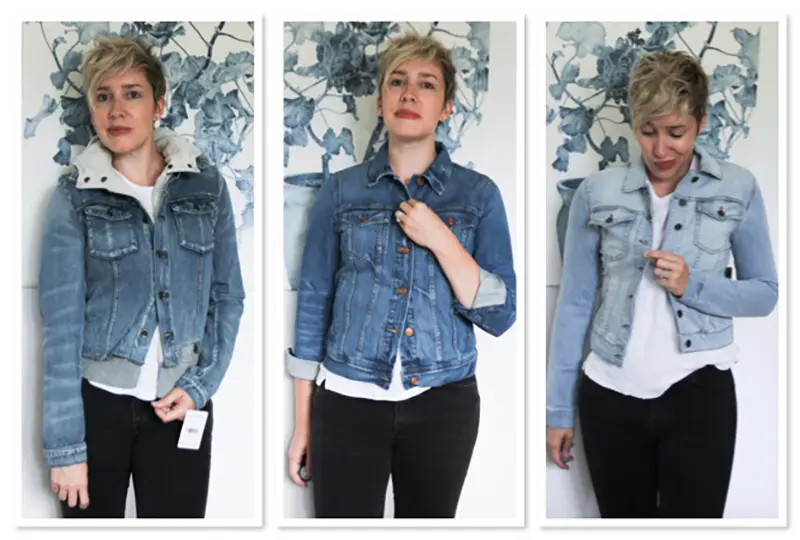
Petite and Shorter Frames
Petite wearers often find cropped denim jackets easier to balance because a shorter outer layer leaves more of the lower body visible. When the hem lands close to a high-rise waistband, the eye reads the lower body as beginning higher, which can make the complete outfit feel longer through the legs. That effect is strongest when the jacket length, trouser rise and footwear are considered together. A short jacket on its own does not guarantee a flattering result if the shoulder or sleeves overwhelm the rest of the frame.
Oversized fits can still work very well on petite bodies when the scale is controlled. The most common problem is not chest volume but the combination of excessive body length, sleeve reach and shoulder drop. A petite oversized block can keep generous chest ease and a relaxed shoulder while shortening the body and correcting the total shoulder-to-cuff length. Pocket dimensions also need to stay proportional. This is one reason cropped oversized jackets can be effective: they keep the relaxed upper-body character while reducing the amount of torso covered by the garment.
Curvy and Fuller Bust Shapes
Cropped jackets can create a clean waist break on curvier figures when the hem stops before the fullest part of the hip. Paired with high-rise jeans or skirts, that placement can keep the outfit visually defined without relying on a tight fit. The front body needs enough length and ease for the bust, however. If the pattern does not account for front volume, the hem can lift noticeably at the front and create a different crop level from the back, especially when the jacket is buttoned.
Oversized jackets can provide more comfort, but simply adding width everywhere may create a heavy rectangular silhouette. A better approach distributes ease where it is needed while controlling hem width, shoulder position and sleeve bulk. It is also useful to decide whether the jacket is primarily designed to be worn open, closed or both. A style that looks balanced while open may pull across the bust when buttoned, while adding enough closing ease can change the open-front appearance. That wearing intention should be set before final pattern approval rather than corrected after production begins.
Tall and Broad-Shouldered Frames
Tall frames generally have more room to carry jacket length and upper-body volume, which makes longer oversized trucker, chore and utility silhouettes easier to balance. Even so, height does not tell the whole story. A tall person with a relatively short torso may still prefer a cropped or regular-length jacket, while a longer torso can make an extreme crop feel abrupt. Sleeve length also deserves separate attention because increasing body length without reviewing shoulder-to-cuff reach can make a jacket look tall in the body but short through the arms.
Broad shoulders offer a different choice rather than a limitation. A cropped jacket with a shoulder seam close to the anatomical shoulder creates a more defined outline, while an oversized jacket deliberately moves that seam outward and makes shoulder breadth part of the look. The oversized route works only when the sleeve head and armhole support the extra width. Denim has limited mechanical stretch compared with jersey, so a jacket can look large and still restrict movement if the pattern geometry is wrong. Mobility should come from coordinated ease through the shoulder, back, armhole and sleeve.
How Do They Change Proportions?
Cropped jackets raise the visual break between the upper and lower body, making the waist and legs more visible. Oversized jackets add visual weight around the shoulders, chest and sleeves, reducing emphasis on the waist and creating a larger outer silhouette. The final effect depends on trouser rise, bottom width, jacket length and fabric structure, so proportion should be judged as a complete outfit rather than from the jacket alone.
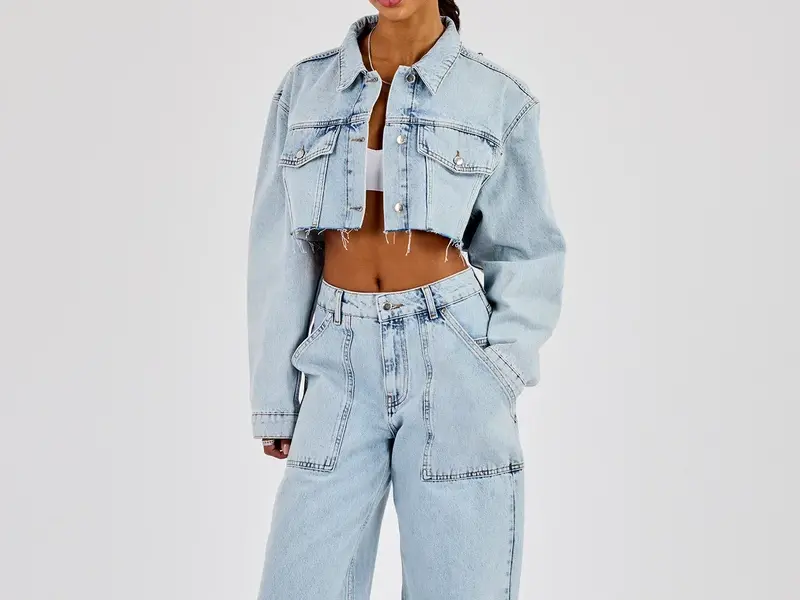
Waist and Leg Proportion
A cropped jacket changes body proportion by placing a strong horizontal line higher on the torso. When that hem sits close to a high-rise waistband, the lower half of the outfit occupies more of the visible silhouette. This is one reason cropped denim jackets pair naturally with high-rise straight, flare and wide-leg jeans. The jacket does not literally make the legs longer, but it changes where the eye reads the upper body as ending, which can create a longer lower-body impression in photographs and everyday wear.
Low-rise jeans create the opposite relationship. More torso becomes visible between the waistband and jacket hem, so the crop becomes part of a more exposed midsection rather than a leg-lengthening device. Mid-rise bottoms sit between those two effects and are easier to style with both cropped and oversized jackets. For coordinated denim collections, this relationship matters enough to test during fitting. A cropped jacket approved only with neutral sample-room trousers can feel unexpectedly short or long when paired with the actual rise heights planned for the range.
Volume Balance
Oversized jackets shift the visual center upward by enlarging the boundary around the shoulders, chest and arms. With slim or straight jeans, that creates a clear contrast between a larger top and a narrower bottom. With baggy or wide-leg jeans, the outfit moves toward a full-volume silhouette. Both can look intentional, but the second combination needs more control because jacket length, trouser width, hem break and footwear are all contributing significant visual mass at the same time.
Fabric can amplify or soften that mass. A firm rigid denim holds the shoulder and sleeve away from the body, so the jacket reads as broad even when the wearer is standing still. A softer washed denim collapses closer to the body and can make the same nominal chest width appear less dramatic. This is a useful reminder that pattern measurements describe available volume, while fabric and finishing determine how that volume is displayed. An oversized fit should therefore be approved in the actual or very close bulk fabric, not only in a convenient sample-room substitute.
Rise and Bottom Shape
The relationship between jacket length and bottom rise is one of the simplest ways to control outfit proportion. High-rise jeans move the waistband upward and a cropped jacket moves the upper hem upward. When those lines meet or nearly meet, the waist becomes visually clear and the legs receive more emphasis. Mid-rise bottoms create a more neutral relationship, while low-rise jeans leave more visible torso beneath a crop. With a longer oversized jacket, the waistband may disappear almost completely, changing the styling focus from waist position to outerwear volume.
Bottom width adds another layer. A cropped jacket with high-rise wide-leg jeans creates a compact top over a long, full lower half. A cropped jacket with straight jeans feels cleaner and less dramatic. Oversized with slim or straight jeans gives an easy volume contrast, while oversized with baggy jeans makes a deliberate street or fashion statement. Cropped oversized with high-rise denim often sits between the two extremes: the shoulder remains relaxed but the waist is still visible. These combinations are useful starting points because they explain proportion rather than simply naming trends.
Which Is Better for Layering?
Oversized denim jackets are generally better for heavy layering because they provide more room through the chest, armhole, back and sleeves. Cropped jackets are usually better for lighter layering when the wearer wants to keep the waist visible and the outfit compact. Real layering comfort depends less on chest width alone and more on armhole depth, bicep width, sleeve shape, fabric stiffness and what the jacket is designed to cover.
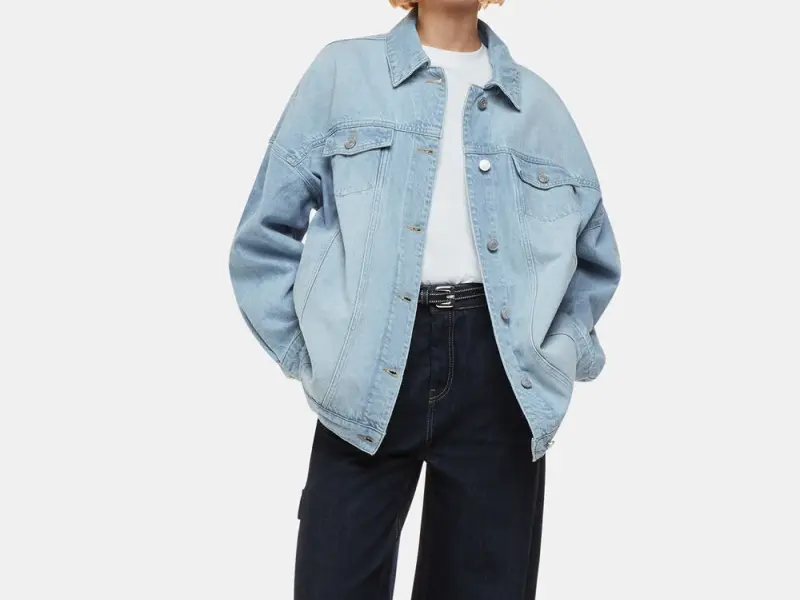
Dresses and Light Layers
A cropped denim jacket works naturally over dresses because it leaves most of the dress silhouette visible. When the hem ends near the waist, a fitted, fit-and-flare, mini, midi or maxi dress can keep its own proportion instead of being covered through the hip. This is particularly useful when the dress has a defined waist, belt or panel line that is meant to remain part of the styling. The jacket adds denim structure without becoming the dominant length in the outfit.
An oversized jacket creates a stronger contrast. Instead of supporting the silhouette underneath, it becomes part of the main shape. A soft slip dress under a rigid oversized denim jacket can work precisely because the textures and volumes oppose each other. Problems appear when both pieces carry substantial volume, such as a full midi dress under a long, stiff jacket. In that case, a shorter body or softer denim can improve balance. Brands developing jacket-and-dress capsules benefit from fitting the garments together because a small shift in jacket length can materially change the final look.
Sweaters and Knitwear
A jacket that feels roomy over a T-shirt may still become restrictive over a sweater. This usually happens because the body has enough chest width but the armhole, bicep or elbow area does not have enough internal space. For knitwear layering, upper-arm width, armhole depth, sleeve shape, cuff opening and back movement are as important as half-chest. Oversized jackets usually handle these areas more naturally because the extra volume is distributed across the upper body instead of concentrated in one measurement.
Fabric weight also changes comfort. Denim in the 8-13 oz range covers a broad set of apparel uses, but the wearer experiences that weight very differently depending on stiffness and wash. An 8-9 oz denim can make a relaxed jacket feel light and fluid, while a 12-13 oz rigid denim creates stronger structure and more bulk. For a transitional jacket intended over fine-gauge knits, moderate ease and a softer hand can be enough. For colder-season styling over heavier sweaters, a roomier armhole and sleeve become more important than simply increasing the body width.
Hoodies and Seasonal Use
Hoodies are one of the best real-world tests of an oversized denim jacket because they expose poor layering geometry quickly. Hoodie sleeves are bulky, the shoulder seam may already sit low and the hood itself adds material around the back neck. A jacket intended to sit comfortably over a hoodie therefore needs enough room through the back, shoulder, armhole and bicep, while the collar and neckline need to accommodate the hood without pushing it awkwardly upward.
Season changes the balance between cropped and oversized. Around 8-9.5 oz denim is commonly suited to lighter, warmer-season or soft-denim applications, 9.5-11 oz is a useful cross-season zone, and 12-13 oz can support more structured jacket or vintage styling. Those are practical working ranges rather than universal rules because weave, composition and finishing change the final result. A cropped oversized jacket can be especially effective for streetwear layering: the upper body has enough room for a hoodie while the shortened jacket prevents the outfit from becoming excessively long.
| Finished Fabric Range | Typical Jacket Direction | Layering Feel | Development Watchpoint |
| 8-9.5 oz | Lightweight cropped or soft oversized | Light; suitable for tees and fine knits | Control seam puckering, drape and post-wash stability |
| 9.5-11 oz | Cross-season trucker, cropped or relaxed fit | Moderate; versatile for everyday layers | Balance structure with comfort and target wash |
| 11-12 oz | Structured cropped, classic trucker or oversized | More substantial | Check sleeve mobility and bulk after wash |
| 12-13 oz | Rigid, vintage, utility or strongly structured oversized | Heavy and defined | Allow sufficient ease; verify shrinkage and handfeel |
How Do Fabric and Wash Affect Fit?
Fabric and wash can change a denim jacket almost as much as the pattern. Rigid denim holds a sharper shape, while lighter or softer denim creates more drape. Washing changes handfeel, shade and dimensions, so a cropped hem can move and an oversized fit can lose planned ease. Final fit should therefore be evaluated on the intended finished fabric and approved after the target wash, not only before processing.

Weight, Structure and Drape
Fabric weight is useful, but it should never be treated as a quality score. A 12-13 oz rigid denim can hold a boxy cropped jacket or a structured oversized silhouette because the fabric resists collapsing. That can be exactly right for vintage, trucker, utility and workwear-inspired products. A lighter 8-10 oz denim behaves differently: it may produce a softer oversized jacket, reduce bulk and improve warm-weather comfort, but it can also show more seam puckering or pocket distortion if the sewing and finishing process is not adjusted.
Two fabrics carrying the same nominal ounce weight can still feel very different. A 100% cotton rigid denim and a fabric containing stretch yarn can differ in thickness, recovery, drape and post-wash handfeel even when both are labeled 11 oz. Wash treatment can widen the difference further. This is why fabric selection should consider composition, weave, surface, thickness, drape, stretch and recovery, shrinkage, colorfastness and the intended wash together. The correct fabric is the one that produces the target silhouette after finishing, not simply the fabric with the biggest number on the swatch card.
Rigid or Stretch
Rigid denim is often a strong choice for jackets because the pattern and fabric structure carry the silhouette. It supports clean trucker lines, boxy cropped bodies and oversized shoulders that are meant to remain visible rather than collapse. Comfort in rigid denim comes mainly from pattern ease and construction, so the shoulder, back and sleeve need to provide enough movement. This is especially important on oversized jackets, where a garment can look generous but still feel restrictive if the armhole and sleeve pitch are poorly developed.
Stretch or low-stretch denim can be useful for more fitted jackets or products where mobility is a stronger priority, but more stretch is not automatically better. If recovery is weak, the garment can grow during wear and lose its intended outline. High elasticity can also soften a silhouette that was supposed to look crisp. A practical rule is to define the visual shape first, then choose the stretch level needed to support it. Structured cropped and oversized styles usually rely more heavily on rigid or low-stretch denim, while closer fits can justify additional stretch when recovery remains stable after washing.
Wash, Shrinkage and Final Measurements
Denim washing changes color, surface and dimensions at the same time. A cropped jacket is particularly sensitive because it has less vertical length to begin with, so a modest shift in finished body length can noticeably change where the hem sits. On an oversized jacket, shrinkage through the chest, sleeve or body can reduce the planned ease and alter the dropped-shoulder effect. Wash can also soften a previously firm fabric, making a structured silhouette drape more than expected even when the measurements remain close to specification.
The safest development route treats shrinkage as an input to the pattern rather than a defect discovered at final inspection. Fabric identity, lot, target shade, wash effect, handfeel and important finished measurements should be linked to an approved wash reference. If a substitute fabric is introduced later, fit and wash need to be checked again because matching composition and ounce weight does not guarantee matching behavior. During bulk production, first-bulk wash review, lot approval, shade grouping and after-wash measurement checks help keep color and silhouette within the approved window instead of separating wash control from fit control.
Which Fit Should a Brand Develop?
A brand should develop the fit that best matches its target customer, collection proportions, layering needs, fabric behavior and price position. Cropped is stronger when waist visibility is central; oversized is stronger when relaxed volume and layering matter. A hybrid can serve both goals. The best commercial fit remains distinctive on the wearer and can be graded, washed and reproduced consistently from approved sample to bulk.
Customer and Collection Fit
Start with how the customer is expected to wear the jacket rather than with a trend image. A cropped style makes sense when the collection already includes high-rise jeans, skirts, dresses or wide-leg bottoms and the waist is intended to remain visible. An oversized style fits naturally into ranges built around hoodies, knitwear, baggy bottoms, utility garments or relaxed streetwear. A cropped oversized style is useful when the collection needs upper-body volume without sacrificing waist placement or lower-body proportion.
The jacket should also have a clear job inside the assortment. A fashion statement can support more extreme body length, shoulder width or sleeve volume because visual impact is part of its purpose. A core denim jacket expected to return across several seasons often benefits from a more moderate silhouette that works with more outfits and body shapes. For JEANZIO projects, the most useful starting point is a clear reference, sketch or tech pack paired with the intended customer, fabric direction, wash and styling use. That information allows the silhouette to be translated into measurable development choices instead of vague fit language.
Pattern and Sample Control
Descriptions such as ‘slightly cropped,’ ‘very oversized’ or ‘like this photo’ are useful creative language, but they are not enough to release a production pattern. The silhouette has to be converted into measurable points: shoulder width, half-chest, body length, hem width, armhole depth, sleeve length, bicep, cuff opening, collar dimensions, pocket size and position, placket width and the finished after-wash measurements that matter most to the design. The relationships among those points determine whether the jacket looks intentional.
A first sample should answer two separate questions: does the jacket match the visual idea, and does the pattern geometry work on the body? Reference images cannot show everything. A front photograph may suggest body length, collar shape and pocket proportion, but it cannot reliably reveal the back yoke, internal construction, fabric stretch, shrinkage or complete measurements. That is why image-led development still needs a pattern, first sample, wash review and fitting process. Once comments are made, each revision should be tied to a controlled pattern and measurement version so changes do not become scattered across emails, images and old sample notes.
Approval and Bulk Consistency
The challenge changes once the fit is approved. During development, the team is searching for the right silhouette. During bulk production, the job is to prevent that silhouette from drifting. The approved pattern, measurement specification, fabric identity, wash reference, trim details and PP sample should therefore agree before bulk cutting begins. From there, material inspection, cutting control, inline sewing checks, pre-wash review, post-wash measurement and final inspection all help protect the same approved shape.
For denim jackets, bulk consistency is especially sensitive to fabric lots and wash response. A cropped style must keep its intended hem position after washing and grading, while an oversized style must retain its planned ease without uncontrolled variation in sleeve reach, shoulder shape or pocket location. JEANZIO’s production control framework combines process inspection with 100% finished-garment checking and final lot-level inspection to customer requirements or AQL-based plans. The value is not a promise of zero variation; it is a traceable method for identifying whether a size shift comes from fabric, pattern, sewing or wash and correcting the responsible stage.
| Development Stage | Main Control | Decision to Freeze |
| Design review | Length, shoulder volume, styling purpose | Cropped, oversized or hybrid direction |
| Pattern | Shoulder, chest, body length, sleeve, hem, pockets | Measurable silhouette |
| Fabric selection | Weight, composition, structure, stretch, shrinkage | Fabric performance window |
| First sample | Fit, proportion, construction, movement | Revision priorities |
| Wash sample | Shade, handfeel, shrinkage, finished dimensions | Approved finished look |
| PP sample | Pattern, wash, trims, workmanship | Bulk reference |
| First bulk | Measurement, shade, construction | Continue, hold or correct |
| Final inspection | Appearance, size, function, packing | Shipment release |
Final Takeaway
Cropped and oversized denim jackets are not competing answers to the same problem. They solve different proportion and wearing needs, and the most useful comparison begins by separating length from volume. Cropped fits expose more of the waist and lower body, oversized fits create more room and a stronger outer silhouette, and cropped oversized jackets combine both ideas when the pattern is balanced carefully. For brands, the decision becomes more reliable when it is connected to target customer, bottom rise, layering, fabric structure, wash behavior and finished measurements. A jacket that looks good in one sample is only the starting point; a commercially strong denim jacket keeps the same design language through grading, washing, bulk production and repeat orders.
Frequently Asked Questions
Is a cropped denim jacket always fitted?
No. Cropped describes body length, not how tightly the jacket fits through the shoulder, chest or sleeve. A cropped jacket can be fitted, boxy, relaxed or fully oversized. The most useful way to evaluate one is to separate vertical length from horizontal volume. Look at where the hem lands, then review shoulder width, chest ease, sleeve volume and hem width. This prevents a short jacket from being incorrectly treated as a fitted jacket and makes comparisons between products much clearer.
Can an oversized denim jacket work on a petite frame?
Yes. Petite wearers can wear oversized denim successfully when the scale is controlled. The jacket does not need to lose all of its chest ease or shoulder drop, but body length, sleeve reach and pocket size often need closer attention. A cropped oversized silhouette is one useful option because it preserves relaxed upper-body volume while keeping more of the waist and legs visible. The best fit is usually the one that looks intentionally relaxed rather than simply too large in every dimension.
Which denim jacket works best with high-rise jeans?
Cropped jackets are often the easiest match with high-rise jeans because the jacket hem can sit close to the waistband, creating a clear waist break and a longer-looking lower-body proportion. A cropped oversized jacket can deliver the same waist placement with more shoulder and sleeve volume. Oversized long jackets can also work with high-rise jeans, but the waistband may be hidden, so the styling emphasis shifts away from the rise and toward the outer silhouette. The preferred result depends on the look you want.
What denim weight is suitable for a jacket?
There is no single correct weight, but roughly 8-13 oz covers a useful working range for many denim garments and jacket directions. Lighter denim around 8-9.5 oz can create softer, easier warm-season jackets, while 9.5-11 oz is versatile across seasons. Heavier 12-13 oz denim can give a cropped or oversized jacket stronger structure and vintage character. Composition, weave and wash matter as much as ounce weight, so the final choice should be tested after the intended finishing process.
Does washing change the fit of a denim jacket?
Yes. Washing can change body length, sleeve length, chest dimensions, handfeel and drape, so the jacket may sit differently even when the sewing measurements were correct before processing. Cropped jackets are especially sensitive to finished body length, while oversized jackets can lose planned ease if shrinkage is not compensated. A reliable development process measures and reviews the garment after the target wash, then uses that finished sample and approved measurements as the production reference rather than relying only on the unwashed sample.
What measurements matter most for a custom cropped or oversized denim jacket?
The key measurements normally include shoulder width, half-chest, body length, hem width, armhole depth, sleeve length, bicep width, cuff opening, collar dimensions and pocket position. Cropped styles are especially sensitive to body length and pocket placement, while oversized styles depend on shoulder, chest, armhole and sleeve volume working together. Finished after-wash measurements should also be defined because denim processing can alter dimensions and fit.