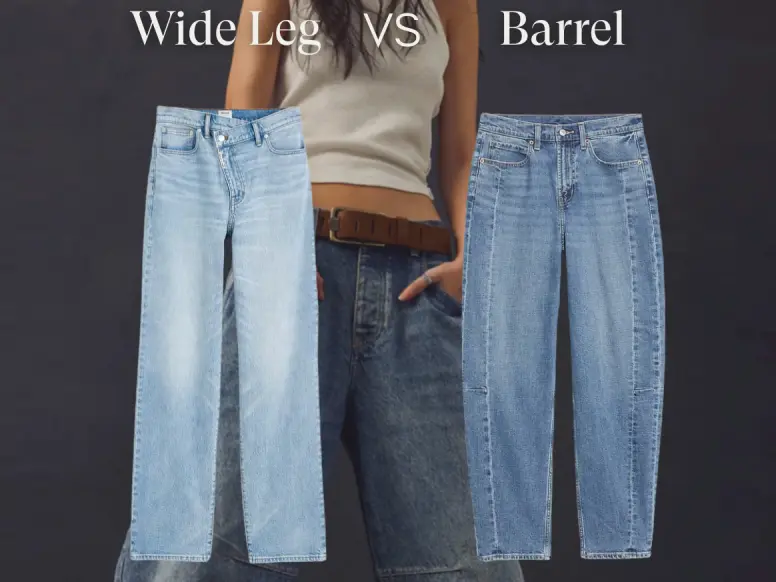
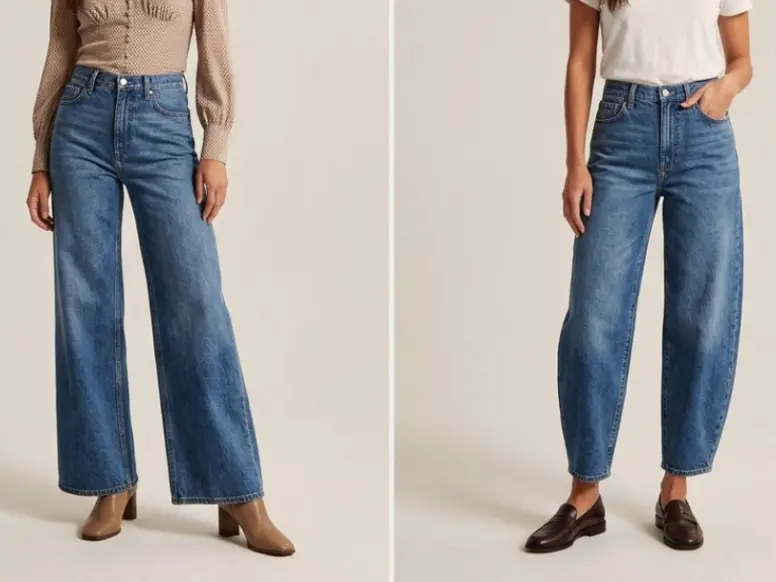
Two pairs of jeans can look equally roomy on a hanger and behave completely differently once they are worn. That is exactly what happens with barrel jeans and wide-leg jeans. Both move away from the close-fitting leg associated with skinny denim, yet their volume is engineered in different places. One creates a curved, sculpted outline; the other builds a longer, more continuous vertical line. That difference changes styling, but it also changes pattern geometry, fabric selection, knee position, hem proportion, wash response, and how reliably the shape can be repeated across sizes.
Barrel jeans widen through the hip, thigh, or knee area before tapering toward the lower leg, creating a curved silhouette. Wide-leg jeans keep substantially more width through the knee and hem, producing a straighter or more flowing line. Neither is automatically better: barrel jeans offer stronger shape identity, while wide-leg jeans generally provide more freedom in fabric, length, styling, and collection planning.
The interesting part begins when two samples carry the same size label but create completely different proportions on the body. A few centimeters moved from the hem to the knee can turn a wide leg into a barrel-like shape; a softer wash can make an architectural leg collapse into a fluid one. For shoppers, that explains why the same trend can feel flattering in one pair and awkward in another. For product teams, it explains why fit names alone are never enough to develop denim accurately.
What Are Barrel Jeans and Wide-Leg Jeans?
Barrel jeans create controlled volume through the upper and middle leg before narrowing again toward the hem. Wide-leg jeans maintain considerably more width through the knee and lower leg. Both are relaxed silhouettes, but their geometry is different enough to change how they fit, move, respond to fabric weight, interact with footwear, and should be developed across a complete size range.
What Defines Barrel Jeans?
A barrel jean is defined by its curved leg path rather than simply by overall looseness. The silhouette usually begins with enough room through the seat and upper thigh, moves outward around the thigh or knee, and then returns inward before reaching the hem. Viewed from the front or side, this creates the characteristic bowed profile. The strongest version feels almost sculptural, while a softer barrel can look like a relaxed tapered jean with more deliberate shape through the middle leg.
The curve has to be positioned carefully. If maximum volume sits too high, the garment can look excessively round around the hip. If it sits too low, the leg may feel heavy around the calf. Pattern makers therefore evaluate the relationship between hip ease, thigh width, knee level, calf width, side-seam projection, and hem opening. In practice, a convincing barrel silhouette is created by several coordinated measurements, not one unusually large knee or one unusually narrow hem.
What Defines Wide-Leg Jeans?
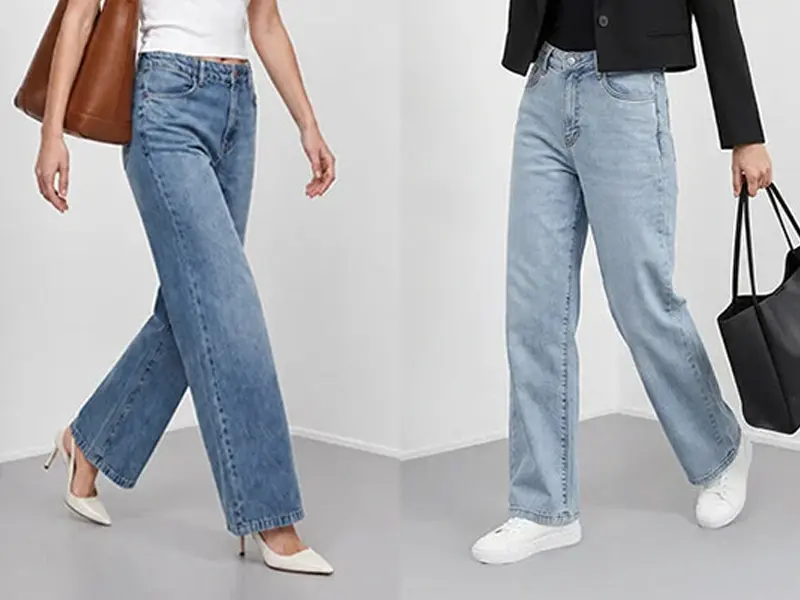
Wide-leg jeans distribute volume more continuously. Instead of expanding and then returning inward, the leg remains broadly open through the knee and toward the bottom. Some versions fall nearly straight from the upper thigh; others widen gradually as they descend. The visual effect is usually a long, uninterrupted column or a soft trouser-like fall, depending on the fabric and wash. That makes the category broad enough to include crisp rigid styles, relaxed everyday jeans, and fluid fashion versions.
A wide-leg pattern still needs control. Simply adding width everywhere can make the garment look bulky through the hip and shapeless through the leg. Developers normally consider rise, crotch depth, hip release, thigh width, knee width, hem opening, and finished length as one system. A well-balanced style should look intentionally wide without appearing accidentally oversized. The wider and longer the leg becomes, the more important the relationship between hem width, inseam, footwear, and fabric drape becomes.
Is Barrel the Same as Horseshoe?
Barrel and horseshoe are closely related terms, and retail brands do not use them with perfect consistency. Both commonly describe a leg that bows outward and narrows again toward the ankle. Some brands use horseshoe for the more exaggerated version and barrel for a softer curve, while others reverse the terminology or use the words interchangeably. That inconsistency is one reason technical teams should never rely on the style name alone when a reference image, sample garment, or measurement specification is available.
A practical development brief should define the actual shape: where the curve begins, where it reaches maximum width, how much the lower leg reduces, whether the hem finishes at the ankle or below it, and whether darts, twisted seams, front panels, pleats, or curved side seams help create the volume. Once those points are defined, the difference between a subtle barrel and an exaggerated horseshoe becomes measurable rather than subjective.
Are Both Considered Wide-Fit Jeans?
Both can sit inside the broader relaxed or wide-fit family, but that classification should not imply that they fit the same way. The clearest comparison is to examine the leg at several checkpoints rather than asking whether the garment simply looks loose. Barrel jeans normally show their strongest difference between the middle leg and the hem, while wide-leg jeans keep the lower leg much more open. Straight and tapered fits help illustrate the same point because each follows a different geometric path from thigh to ankle.
| Fit Feature | Barrel Jeans | Wide-Leg Jeans | Straight Jeans | Tapered Jeans |
| Upper leg | Relaxed to wide | Relaxed to wide | Moderate | Moderate |
| Knee | Often a key volume zone | Remains wide | Similar to thigh progression | Begins narrowing |
| Lower leg | Reduces visibly | Stays open | Stays relatively consistent | Narrows steadily |
| Hem | Narrower than maximum leg volume | Broad | Moderate | Narrow |
| Side-seam line | Curved | Straight or gently opening | Mostly straight | Gradually inward |
| Visual effect | Sculptural and directional | Long, open, fluid or structured | Clean and classic | Streamlined |
What Is the Difference in Fit and Shape?
The biggest difference is the direction of the leg line. Barrel jeans intentionally move outward and then inward, so volume is concentrated around the upper or middle leg. Wide-leg jeans preserve more width toward the bottom. That changes the location of visual weight, the amount of fabric around the ankle, the importance of knee placement, and the way length and footwear influence the finished proportion.
Where Is the Leg Volume?
Volume placement is the most reliable way to separate the two silhouettes. In a barrel fit, visual mass is typically concentrated between the upper thigh and knee area, after which the pattern removes width before reaching the hem. In a wide-leg fit, volume remains more continuous. The knee and lower leg do not pull inward strongly, so the silhouette reads as open from top to bottom even when the upper hip is relatively controlled.
During fitting, it helps to stop thinking about a jean as one outline and instead assess several horizontal levels. Hip, thigh, knee, calf, and hem measurements create a sequence. The sequence tells you whether the shape expands, stays constant, or contracts. A barrel jean needs a deliberate change in direction; a wide leg needs enough continuity to avoid looking tapered. This approach also makes sample comments clearer because teams can specify which level needs adjustment rather than saying the entire leg feels too big or too small.
How Does the Hem Change Shape?
The hem is one of the strongest visual controls in both styles. On barrel jeans, the final reduction toward the ankle completes the curved shape. If the hem is too wide relative to the knee, the barrel effect weakens and the garment starts to resemble a relaxed wide leg. If the hem becomes too narrow, the style can look aggressively tapered and may feel less comfortable when the wearer puts the jeans on or takes them off.
Wide-leg jeans use the hem in the opposite way. A generous opening extends the width developed above it, and its visual effect depends heavily on length. A broad hem that finishes above the ankle looks completely different from the same width touching a sneaker or pooling over a shoe. For that reason, hem opening and inseam should be approved together. Altering one without reviewing the other can change the style even when every other measurement remains unchanged.
Which Fit Looks More Structured?
Barrel jeans usually have greater potential to look sculptural because the pattern itself contains a directional curve. However, that curve only remains visible when the fabric can hold enough space away from the body. A very soft, heavily softened denim may collapse inward and turn a strong barrel into a slouchy tapered shape. Medium-weight rigid or low-stretch denim often gives the pattern clearer definition because the fabric supports the intended three-dimensional form.
Wide-leg jeans can deliberately move in either direction. Rigid denim can create a crisp, architectural column, especially in darker or cleaner washes. Lighter denim with greater drape can produce a relaxed trouser-like fall with more movement around the lower leg. This versatility is commercially useful because a brand can keep a recognizable wide-leg platform while creating very different seasonal expressions through changes in fabric weight, handfeel, finish, length, and wash.
How Do Rise and Length Change the Look?
Rise changes where the eye perceives the leg to begin. A high-rise barrel jean creates stronger contrast between a defined waist and a curved leg, while a lower rise can make the same volume feel more relaxed and less formal. Wide-leg jeans respond similarly: higher rises can emphasize a long vertical line, while mid- or lower-rise versions often feel more casual, slouchy, or influenced by streetwear proportions. Crotch depth must be considered alongside rise because two jeans with the same waist position can still hang differently through the seat.
Length has an equally strong effect. Barrel jeans often benefit from an ankle or near-ankle finish because the narrowing lower leg remains visible. Wide-leg jeans can work at cropped, full, or puddle lengths because the open hem is part of their identity. When adapting a style for petite, regular, and tall ranges, simply changing the inseam is rarely enough. Knee position, curve location, pocket placement, and sometimes rise also need adjustment so that the proportions remain consistent across heights.
Which Jeans Flatter Different Body Types?
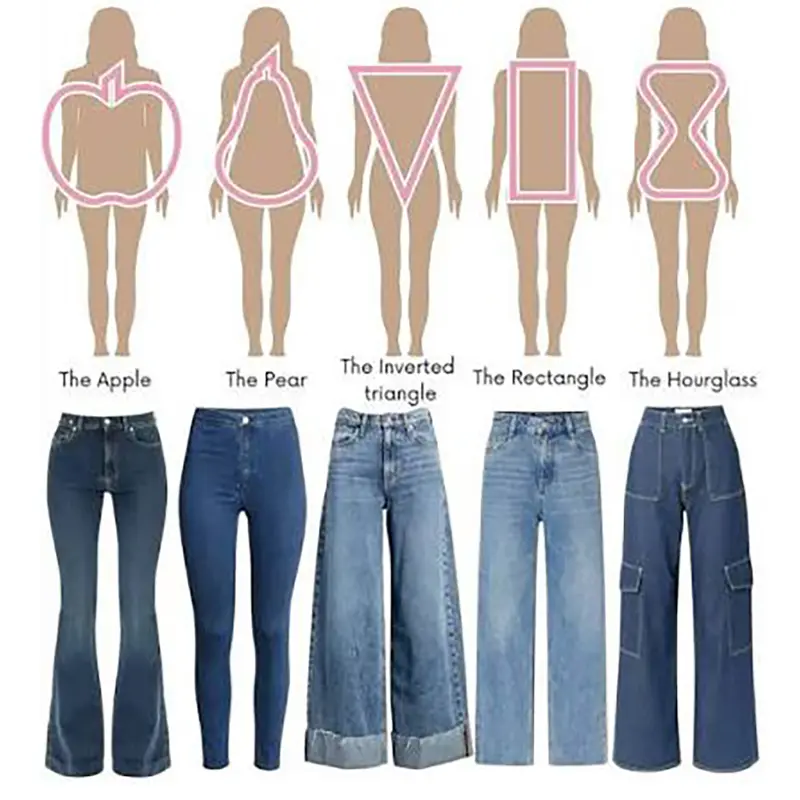
Neither silhouette belongs to one body type. The better fit depends on proportions such as waist-to-hip difference, rise, crotch depth, thigh ease, knee position, inseam, hem opening, and footwear. A well-balanced barrel jean can work on many frames, while a poorly proportioned wide leg can feel overwhelming. Fit quality matters more than broad claims about which shape is universally flattering.
Which Works for Petite Frames?
For petite wearers, vertical proportion is usually more important than width alone. A barrel jean needs enough distance between the hip, knee, and hem for the outward-and-inward curve to read clearly. If a regular-length pattern is shortened only from the bottom, the widest point can remain too low and make the lower leg look heavy. A well-developed petite version may therefore reposition the knee and curve apex while also adjusting rise, inseam, and hem opening.
Wide-leg jeans present a different challenge. Their continuous lower-leg width makes unintended excess length immediately visible. A full-length style can lengthen the appearance of the leg when the hem meets footwear cleanly, but random pooling can make the garment look oversized. Cropped versions can also work well when the crop is clearly intentional. Petite development is therefore about preserving the original design proportions, not simply subtracting a fixed number of centimeters from the inseam.
Which Works for Curvy Figures?
Curvy figures often reveal whether a jean was built from an appropriate waist-to-hip relationship. A roomy leg does not automatically solve fit through the waistband, seat, and rise. If a wearer needs substantially more room through the full hip than the waist, sizing up may solve hip tension but create waistband gaping. Reducing the waist afterward without adjusting the yoke, back rise, seat shape, or waistband curvature can create new drag lines and discomfort.
Barrel jeans can provide generous seat and thigh room, but the volume must start in the right place. If the curve begins too close to the hip, it may add more visual width than intended. Wide-leg jeans can be equally comfortable, yet they still need a correct hip block. For brands serving a broad size range, separate fit blocks or more thoughtful grading around waist-to-hip relationships are usually more reliable than increasing every measurement by the same amount.
Which Makes Legs Look Longer?
Wide-leg jeans usually have the more direct path to a leg-lengthening effect because their line can travel continuously from the waist or hip toward the shoe. High-rise, full-length versions strengthen that vertical impression when the hip area remains controlled and the hem falls cleanly. The effect is visual rather than mathematical: two jeans with the same inseam can look different in length because one keeps the eye moving downward while the other interrupts that line through shape changes.
Barrel jeans intentionally interrupt the straight line. The outward curve and inward taper are part of the design, so maximum visual length is not their only objective. A well-positioned curve can still look balanced and modern, especially when the rise and ankle position support the wearer. Problems appear when the widest point sits too low, the hem is disproportionately narrow, or the rise shortens the visible leg. These are fit-engineering issues rather than evidence that barrel jeans cannot work on shorter or fuller bodies.
Do Rise and Inseam Matter?
Rise and inseam are two of the most important measurements in both silhouettes, but neither number should be judged in isolation. A 30-inch inseam can look long on one fit and short on another because rise, crotch depth, hem width, and footwear change the visual outcome. The same principle applies to barrel jeans: even when the total inseam remains correct, moving the knee or curve apex several centimeters can change where the garment appears widest and whether the taper feels balanced.
A practical sample review should record post-wash measurements rather than relying only on the paper pattern. The following points provide a useful minimum set for comparing silhouettes across sizes and sample versions. Reviewing these points together makes it easier to identify whether a problem comes from overall sizing, vertical placement, lower-leg geometry, or wash behavior. It also gives designers, technicians, and factories a shared vocabulary for describing changes without relying on vague comments such as “the leg feels wrong.”
| Measurement | Main Fit Effect | Barrel Sensitivity | Wide-Leg Sensitivity |
| Waist | Sets rise position and waistband fit | High | High |
| Full hip | Controls seat balance and upper volume | High | High |
| Front/back rise | Affects coverage and leg proportion | High | High |
| Thigh | Establishes initial volume | High | High |
| Knee | Controls curve location or leg continuity | Very high | High |
| Inseam | Determines finished length | High | Very high |
| Hem opening | Defines taper or openness | Very high | Very high |
| Side-seam balance | Reveals curve quality or twisting | Very high | High |
Which Denim Fabric Works Best?
Barrel jeans usually need enough fabric body to preserve their curved structure, so rigid or low-stretch denim is a strong starting point. Wide-leg jeans have a wider material window: firm denim creates an architectural silhouette, while lighter, drapier denim creates fluid movement. Weight is only one variable; composition, weave density, thickness, stretch, recovery, wash response, and finished handfeel also influence the result.

Is Rigid Denim Better for Barrel Jeans?
Rigid denim is often well suited to barrel jeans because the silhouette depends on the garment holding shape away from the leg. A medium-weight cotton-rich rigid fabric can make the side-seam curve and knee volume easy to read. Low-stretch constructions can also work when they retain enough body and recover well after wear. What matters most is the finished fabric after the intended wash, because softening treatments can reduce the stiffness that initially supported the shape.
For product development, roughly 8-13 oz covers a useful working spectrum for many fashion-denim applications, but not every weight suits every barrel concept. Lighter 8-9 oz denim tends to move more freely and may create a softer barrel, while approximately 10.5-12 oz often offers a balanced combination of wearability and structure. Around 12-13 oz can create stronger architecture and vintage character, although heavy multi-layer areas such as the waistband, fly, pocket openings, and belt loops also become more demanding to sew cleanly.
Do Wide-Leg Jeans Need More Drape?
Wide-leg jeans do not necessarily need high drape because the category supports both crisp and fluid interpretations. A structured wide leg can use rigid denim to create a strong vertical or slightly A-shaped line. This works well when the design is intended to feel substantial, vintage, or workwear influenced. The fabric may move relatively little, yet the generous leg width still makes the silhouette clear and visually confident.
A softer wide leg uses a different logic. Lightweight denim around 8-10 oz can create a more fluid, trouser-like result, particularly after enzyme washing or soft finishing. Drape becomes more important than ounce weight alone because two fabrics with the same nominal weight can fall differently due to yarn size, weave density, fiber composition, and finishing. When a reference image shows a leg cascading smoothly from the hip, specifying only a fabric weight is therefore not enough to reproduce the intended movement.
How Does Fabric Weight Change Fit?
Fabric weight influences structure, but it should never be treated as a shortcut for predicting fit. Composition and construction matter just as much. An 11 oz 100% cotton rigid denim can feel crisp and dry, while an 11 oz comfort-stretch fabric may feel softer, denser, and more responsive to the body. Finishing can change the result again. That is why development teams should evaluate weight together with thickness, drape, stretch, recovery, surface character, and target wash.
| Denim Weight | Typical Character | Barrel Direction | Wide-Leg Direction |
| 8.0-8.9 oz | Light, soft, mobile | Soft or subtle barrel only | Fluid summer and warm-weather styles |
| 9.0-9.9 oz | Lightweight with more stability | Relaxed barrel possible | Soft commercial wide leg |
| 10.0-10.9 oz | Balanced light-medium structure | Moderate curved shapes | Broad commercial use |
| 11.0-11.9 oz | Core jeans structure | Strong starting range | Structured or classic wide leg |
| 12.0-13.0 oz | Firm, vintage, architectural | Strong sculptural support | Bold structured wide leg |
These ranges are practical references rather than universal rules. A well-chosen 10 oz fabric can hold a better barrel than a poorly finished 12 oz fabric, and a premium lightweight denim can cost more than a heavier basic quality. The silhouette should be defined first, then fabric options should be compared according to how closely they reproduce the intended finished shape, handfeel, wash, seasonal use, and target price.
How Does Washing Affect Shape?
Washing changes more than color. Desizing, enzyme treatment, bleaching, stone effects, softening, and mechanical finishing can alter handfeel, shrinkage, surface character, strength, and the way the leg hangs. A barrel sample that looks crisp before washing may become much softer after finishing, reducing the clarity of its outward curve. A wide leg can become more fluid after softening, which may be desirable, but unexpected inseam shrinkage can change how the hem meets the shoe.
Shrinkage should be measured in both warp and weft directions because length and width do not necessarily change at the same rate. Exact percentages vary by fabric construction and wash recipe, so responsible development relies on actual test results rather than a generic allowance. Once a fabric-wash combination is selected, pre-wash and post-wash measurements should feed back into the production pattern. For stretch denim, recovery should also be checked after washing because a fabric that stretches easily but does not recover can create knee bagging and seat growth during wear.
How Are Barrel and Wide-Leg Jeans Developed?
Both silhouettes should be developed as connected systems rather than isolated sketches. The process moves from reference interpretation to fabric choice, pattern engineering, fit sampling, wash trials, post-wash measurement, and approval. Barrel jeans require especially careful control of side-seam curvature and lower-leg reduction, while wide-leg jeans depend on disciplined balance between hip ease, leg width, hem opening, length, and drape.
How Is the Barrel Curve Patterned?
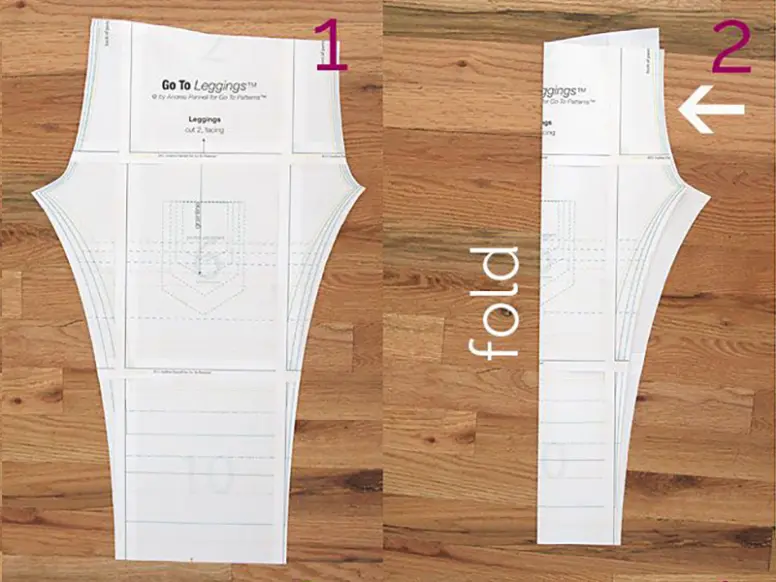
A convincing barrel curve is built deliberately into the pattern. The pattern maker decides where the leg starts moving outward, where it reaches maximum projection, and how quickly it returns toward the ankle. Adding width only at the thigh usually produces a loose jean rather than a true barrel. Side-seam geometry, inseam balance, knee position, calf reduction, and hem width must work together so that the garment looks curved without rotating around the leg.
The fit should be checked from the front, side, and back because a barrel can appear clean in one view while showing excessive bulging or twist in another. Movement also matters. When the wearer walks or sits, the fabric should redistribute without making the curve look accidental. If the design begins from a photograph, developers should determine whether the visible shape is created by a standard curved side seam, twisted seam placement, darts, panel seams, pleats, or styling. Copying only the outer silhouette can miss the structural mechanism that made the reference successful.
How Is Wide-Leg Volume Controlled?
Wide-leg development requires restraint even though the finished garment contains considerable volume. A common mistake is to increase hip, thigh, knee, and hem measurements equally. This can make the upper section bulky and the lower section shapeless. A cleaner method defines where the body should remain relatively controlled and where the visual openness should become obvious. The best balance depends on whether the design aims for tailored, relaxed, oversized, puddle, or vintage proportions.
The pattern should be reviewed as a chain of relationships: waist to hip, hip to thigh, thigh to knee, knee to hem, and hem to finished length. Fabric drape then determines how strongly those measurements remain visible. A rigid 12 oz wide leg can stand away from the body, while a softer 9 oz version may collapse closer to the wearer even if the flat pattern is identical. That is why a successful wide-leg block cannot be separated from its approved fabric and wash behavior.
How Are Fit Samples Evaluated?
Fit sampling should answer three practical questions: does the garment match the design, does it fit the intended wearer, and can the result be repeated in production? The first sample establishes the interpretation of the reference or Tech Pack, but comments need to become measurable changes. Phrases such as “more barrel” or “less wide” are not enough. Stronger comments identify which measurement or curve needs adjustment and whether other approved points must remain unchanged.
A disciplined review records the sample version, fabric reference, wash, size, measurement changes, and photographs taken in a consistent stance. Teams should compare not only waist and hip but also knee position, hem opening, inseam, side-seam balance, and the garment after movement. When JEANZIO reviews a custom silhouette, a reference image or Tech Pack can be translated into these specific decisions before the style moves toward production. That reduces the chance that one person’s visual interpretation becomes an undocumented manufacturing instruction.
How Is Wash Shrinkage Allowed For?
Shrinkage compensation begins before bulk cutting, not after finished garments return from washing. The development team first needs data from the intended fabric and wash combination, then uses that information to adjust the production pattern. If a full-length wide leg looks perfect before wash but loses meaningful inseam length afterward, the finished hem will no longer meet the shoe as intended. Sewing accuracy cannot compensate for a pattern that ignored known wash behavior.
The same principle is even more visible on barrel jeans because shrinkage can alter waist, hip, thigh, knee, calf, inseam, and hem at the same time. That can move the apparent curve or change the strength of the taper. Production control should therefore link the approved pattern, approved fabric, approved wash, and post-wash measurement standard. If a substitute fabric is introduced later, key fit and wash checks should be repeated instead of assuming that matching composition and nominal weight will produce the same result.
Which Style Is Better for Your Denim Collection?
Wide-leg jeans are usually the more flexible platform because they can support structured, fluid, cropped, full-length, and seasonal variations without losing their identity. Barrel jeans offer stronger visual recognition and a more directional shape. The better choice depends on target customer, fabric strategy, price level, styling range, trend exposure, fit architecture, and whether the style is expected to become a long-term core product or a seasonal statement.
Which Is More Versatile?
Wide-leg jeans generally offer greater versatility because the category can absorb large changes in fabric, rise, length, and wash while remaining recognizable. A brand can develop a dark rigid wide leg, a soft summer version, a cropped pair, and a full-length puddle fit without completely changing the underlying product story. Once a reliable waist-to-hip relationship and leg block are established, that flexibility can make wide leg useful as a repeatable platform for seasonal updates.
Barrel jeans also allow variation, but their identity depends more strongly on the curve. Reduce that curve too much and the garment becomes relaxed tapered; open the hem too far and it starts to read as wide leg. The geometric window is therefore narrower. This makes barrel jeans especially useful when the shape itself is meant to attract attention, while wide-leg jeans often work well when the collection needs a balance of fashion relevance, styling flexibility, and repeat potential.
Are Barrel Jeans Still in Style?
Barrel jeans remain relevant in 2026 rather than disappearing after a short novelty cycle. Recent fashion coverage from Vogue, British Vogue, Glamour, and ELLE continues to feature barrel silhouettes, while wide-leg jeans remain equally visible as an established relaxed-denim direction. The more useful conclusion is not that one style has replaced the other, but that modern denim assortments now support several leg shapes at the same time instead of revolving around one dominant fit.
For a brand, trend visibility should not automatically determine inventory depth. A directional barrel silhouette can be tested through a focused drop, controlled color range, or proven fabric platform before it becomes a larger program. Wide leg often carries lower explanation risk because customers already understand its basic shape, yet fit, rise, wash, and length still determine whether it performs well. Trend awareness should guide product timing, while actual customer response should decide whether a style earns repeat status.
Can Both Use the Same Denim?
Sometimes they can, and fabric consolidation can simplify purchasing, shade management, wash development, and minimum-order planning. A well-chosen medium-weight rigid denim may support both a structured wide leg and a barrel silhouette. However, using the same fabric is only sensible when both products still achieve their intended shape. A soft, drapey wide-leg reference and a strongly sculpted barrel may require different material behavior even if using one fabric would be easier commercially.
When comparing whether one denim can serve both fits, teams should review composition, weight, thickness, drape, stretch, recovery, shrinkage, surface character, and wash response. The decision should be made after sample washing, not from a swatch alone. A substitute fabric that matches 100% cotton content and 11 oz weight can still hang differently because of yarn, weave density, finishing, and shrinkage. Shared fabric is valuable only when it preserves the product result customers are expected to see and feel.
How Should Brands Choose?
The choice becomes clearer when the style is given a specific job inside the collection. Wide leg is usually the stronger starting platform when the priority is broad styling appeal, multiple lengths, several wash directions, and the possibility of repeating a proven fit. Barrel is attractive when the collection needs strong silhouette recognition, a more editorial profile, or a shape that feels obviously different from existing straight and wide styles. Neither role is inherently superior; each solves a different merchandising problem.
A useful range plan can therefore include both rather than forcing a single winner. Wide leg can provide commercial volume and multiple fabric or wash extensions, while barrel introduces controlled newness. The technical records should remain separate: each fit should keep its own approved pattern, post-wash measurement chart, fabric reference, wash standard, and fit photographs. For brands starting from a reference image or existing garment, a development review can determine whether the desired result is truly barrel, horseshoe, wide leg, or a hybrid before sampling begins.
The comparison ultimately comes down to geometry rather than fashion labels. Barrel jeans are designed around a visible outward-and-inward curve, while wide-leg jeans protect an open lower-leg line. Once that difference is understood, choices about body proportion, fabric weight, wash, length, and product role become much easier. The strongest results come from treating silhouette, material, and finishing as one system, then validating the finished garment after washing instead of assuming the paper pattern tells the whole story. For a collection team, that discipline is what turns an attractive reference image into a fit that can be approved, graded, repeated, and trusted across future orders.
Are barrel jeans the same as wide-leg jeans?
No. Both are relaxed silhouettes, but the leg geometry is different. Barrel jeans become wider through the thigh or knee area and then narrow again toward the ankle, creating a curved profile. Wide-leg jeans preserve much more width through the knee and hem, so the line remains open. A soft barrel can sometimes resemble a relaxed wide leg in photographs, which is why side-view shape, knee width, and hem opening are useful comparison points.
Are barrel jeans and horseshoe jeans the same thing?
They belong to the same curved-leg family, but terminology varies between brands. Horseshoe is often used for a more exaggerated outward bow, while barrel may describe a subtler curve, yet there is no universal retail standard that fixes the difference. When developing or buying a product, it is safer to compare the actual side-seam curve, knee position, lower-leg taper, hem opening, and finished length rather than assuming the product name describes an exact technical specification.
Which is more flattering, barrel jeans or wide-leg jeans?
Neither style is universally more flattering because fit depends on the relationship between the garment and the wearer’s proportions. Wide-leg jeans can create a long vertical line, particularly in high-rise and full-length versions. Barrel jeans create more visible shape through the middle leg and can balance proportions when the curve is positioned correctly. Waist-to-hip fit, rise, knee position, inseam, hem width, and footwear often matter more than the silhouette name itself.
Can petite women wear barrel or wide-leg jeans?
Yes, both can work well on petite frames when their proportions are adjusted rather than simply shortened. Barrel jeans may need a higher curve apex, repositioned knee, and revised hem so the bowed shape does not sit too low. Wide-leg jeans need deliberate length and hem balance to avoid unintended pooling. Petite fit development should review rise, hip level, pocket placement, knee level, inseam, and hem because changing only the bottom length can distort the original silhouette.
What denim weight is best for barrel jeans?
There is no single correct weight, but medium-weight rigid or low-stretch denim is often a practical starting point because it can hold the curved silhouette away from the body. Around 10.5-12 oz frequently offers useful structure for core jeans development, while heavier 12-13 oz qualities can create a stronger architectural effect. Lighter fabrics may work for softer barrel shapes. Yarn, weave, finishing, drape, and target wash must still be tested because ounce weight alone cannot predict shape.
Do wide-leg jeans need lightweight denim?
No. Wide-leg jeans can be developed in both lightweight and structured denim. Approximately 8-10 oz fabric can create a soft, flowing summer or trouser-like silhouette, while 11-13 oz rigid denim can create a stronger vertical and architectural shape. The right choice depends on whether the finished leg is meant to move fluidly or stand away from the body. Drape, shrinkage, handfeel, and wash response should be considered alongside nominal fabric weight.
Which is better for a denim collection, barrel or wide-leg jeans?
Wide-leg jeans are often easier to use as a broad platform because they support many rises, lengths, fabric weights, and wash directions while remaining easy to recognize. Barrel jeans bring stronger visual identity and can add fashion freshness to a range. A collection does not need to choose only one. Many programs benefit from using a proven wide-leg fit for repeatability and a carefully tested barrel style for directional interest, then expanding whichever silhouette earns the strongest customer response.