Skip to content

Denim trends rarely move in a straight line. One season does not simply erase the previous one, and a new silhouette does not become commercially important just because it appears on a runway. The more useful signals are found where several changes meet: leg shape, rise, length, fabric structure, wash character, styling, and the way customers actually want to wear denim. For 2027, that intersection is creating a wider and more interesting market than a single headline such as “wide jeans are out” or “skinny jeans are back.”
Women’s denim in 2027 is likely to be defined by refined wide and loose silhouettes, renewed straight and slim fits, darker or raw-looking indigo, selective vintage finishes, crafted surface details, and stronger denim categories beyond jeans. The most convincing products will combine silhouette, fabric weight, stretch, drape, wash, rise, length, and construction as one coordinated design rather than treating each element separately.
That distinction matters when a trend moves from a mood board to a real garment. A barrel jean can look sculptural in the right rigid denim and ordinary in a fabric that is too soft. A slim jean can feel current when the leg is clean and the fabric has controlled recovery, yet dated if it simply repeats an old high-stretch skinny block. A dark indigo dress can look polished, but small shrinkage or seam-balance errors become more visible when the surface is clean. The interesting question for 2027 is therefore not only what will be fashionable, but which combinations of fit, material, wash, and product type are strong enough to become repeatable wardrobe pieces.
What Are the Biggest Women’s Denim Trends for 2027?
The strongest 2027 directions are likely to include refined loose proportions, cleaner straight and slim shapes, deeper indigo and raw-looking surfaces, more controlled vintage effects, and carefully placed craft or decorative details. Rather than one dominant look replacing everything else, women’s denim is becoming more segmented, with core wardrobe fits and fashion-led statement pieces developing side by side for different styling needs, seasons, and price points.
What Is Changing From 2026 to 2027?
The biggest change is a move from obvious exaggeration toward more deliberate proportion. Very wide legs, low-slung baggy jeans, heavy distressing, and strong Y2K references have helped define the recent denim cycle, but the next stage is less about making everything bigger or more visibly distressed. Wide and loose silhouettes remain important, yet they are increasingly being balanced by cleaner straight legs, narrower cigarette shapes, bootcuts, and polished dark denim. For product teams, this creates a more useful market than a one-fit trend because different silhouettes can serve different occasions. A structured wide leg may remain a core fashion piece, while a relaxed straight becomes the easy everyday option and a slim-straight offers a cleaner alternative. The practical shift is from chasing novelty to creating stronger separation between fits. A new style needs a clear reason to exist through its rise, seat balance, leg line, fabric, wash, or length rather than being only a slightly altered version of another SKU.
Are Loose Silhouettes Becoming More Refined?
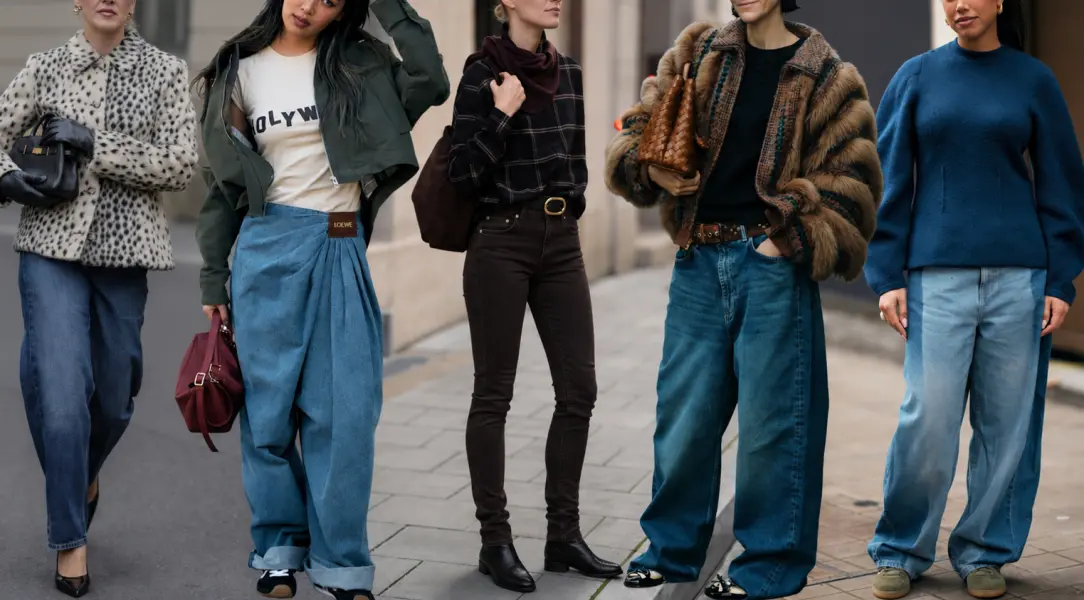
Loose denim is becoming more precise rather than simply less loose. A wide-leg jean, baggy jean, slouchy fit, and puddle jean can all carry substantial volume, but the location of that volume changes the entire look. A tailored wide leg may stay relatively controlled through the hip before opening down the leg, while a baggy jean can carry more ease through the seat and thigh and may use a lower rise. A puddle jean depends on both width and additional length so fabric stacks at the shoe. These differences are controlled through the front and back rise, hip ease, thigh width, knee position, side-seam balance, hem width, pocket scale, and finished inseam. Fabric has equal influence. Structured rigid denim holds a stronger outline, while lighter denim collapses and moves. JEANZIO’s fit-to-fabric development framework therefore separates structured and drapey wide-leg routes instead of treating all wide jeans as one pattern with different fabric colors.

Is Raw Denim Becoming More Fashion-Led?
Raw and raw-looking denim are becoming more useful as fashion materials because they allow silhouette and construction to do more of the visual work. Dark, minimally washed denim can sharpen a wide trouser, give a fitted vest more definition, make a long skirt feel cleaner, or turn a denim dress into something closer to structured daywear. The important development question is what “raw” means for the actual product. It may refer to truly unwashed denim, a light rinse that keeps a raw appearance, or simply a deep clean indigo without obvious fading. Those routes behave differently in shrinkage, crocking, handfeel, seam puckering, and customer care. For a five-pocket relaxed jean, modest dimensional change may be manageable; for a fitted dress or narrow skirt, even a small movement at the waist, bust, hip, or length can change the wearing experience. Brands should therefore approve the garment in the condition in which it will be sold, not only approve an attractive unwashed fabric swatch.
Are Crafted Denim Surfaces Growing?
Crafted surfaces are gaining value because they let brands make familiar denim silhouettes feel distinctive without rebuilding the entire fit architecture. Embroidery, rhinestones, patchwork, studs, appliqué, raw edges, localized abrasion, laser work, mixed washes, and controlled deconstruction can all create a stronger visual identity, but they are only commercially useful when the effect can be repeated. A rhinestone sample needs more than an attractive placement: artwork dimensions, spacing, attachment conditions, wash sequence, and durability all influence the bulk result. Embroidery can distort the base fabric or change after washing, while patchwork becomes risky when two materials shrink differently. Distressing is equally technical; a knee opening or worn pocket edge needs location, size, density, reinforcement, and an acceptable tolerance. JEANZIO’s wash-development framework treats these details as measurable production standards rather than instructions such as “make it vintage” or “add more distressing.” The best 2027 statement denim may look spontaneous, but its manufacturing controls should be anything but spontaneous.
Which Women’s Jeans Fits Will Be in Style in 2027?
Women’s jeans in 2027 are likely to support several fit families at the same time. Wide-leg shapes should remain important, straight and slim-straight fits are strengthening, bootcut and flare provide an alternative to pure volume, and barrel or baggy jeans still work as fashion-led silhouettes. Rise, inseam, fabric structure, recovery, and hem proportion will increasingly determine whether each fit feels fresh rather than the fit name alone.
| Fit Direction | Practical Fabric Route | Typical Stretch Level | Key Development Control |
| Wide leg | Structured rigid or drapey lightweight denim | Low to medium | Hip balance, side seam, thigh-to-hem line |
| Straight | Rigid or comfort stretch | Low to medium | Seat balance, knee line, stable hem |
| Slim | Comfort stretch or controlled low stretch | Medium | Thigh ease, knee position, recovery |
| Flare / Bootcut | Rigid, comfort stretch, or stretch denim | Depends on target fit | Knee point, flare curve, finished inseam |
| Baggy | Rigid or low-stretch denim | Low | Rise, seat volume, pocket scale, stacking |
| Barrel / Horseshoe | Structured rigid or low stretch | Low to medium | Curved side seam, knee width, hem reduction |
Are Wide-Leg and Straight Jeans Still Important?
Wide-leg jeans remain useful because the category has become broad enough to serve several wardrobes rather than one fashion moment. A high-rise, clean wide trouser can look polished; a mid-rise relaxed wide leg can feel casual; a lower-slung style creates a younger proportion; and a longer puddle version uses extra inseam and drape as part of the design. Straight jeans solve a different need. They are easier to wear across seasons, work with almost every wash level, and can sit between a narrow slim fit and a high-volume wide leg. The strongest assortment does not need to choose one over the other. It can use a visually distinctive wide leg as a fashion anchor and a straight leg as a dependable repeat style. The technical difference should remain clear: pocket size, seat ease, thigh volume, knee position, hem width, and fabric behavior need to create two genuinely different wearing experiences rather than two products separated by only a few centimeters at the hem.
Are Slim, Flare and Bootcut Jeans Returning?
Slimmer denim is returning in a more varied form than the classic high-stretch skinny jean. A modern slim fit can follow the thigh and knee while keeping enough ease at the calf and hem to look clean rather than compressed. Cigarette and slim-straight proportions sit between straight and skinny, which makes them easier to combine with boots, flats, and tailored footwear. Flare and bootcut offer another route to a narrower upper leg without returning to a fully tight silhouette. Their success depends heavily on knee placement. The knee is the point from which the lower leg begins to open, so moving it even slightly can change whether the flare looks balanced on the body. JEANZIO’s pattern framework identifies knee position, knee circumference, the curve from knee to hem, and post-wash inseam as key controls for flare and bootcut development. Simply widening the hem of a straight pattern rarely creates the same result as developing the flare line deliberately.
Are Barrel and Baggy Jeans Still Relevant?
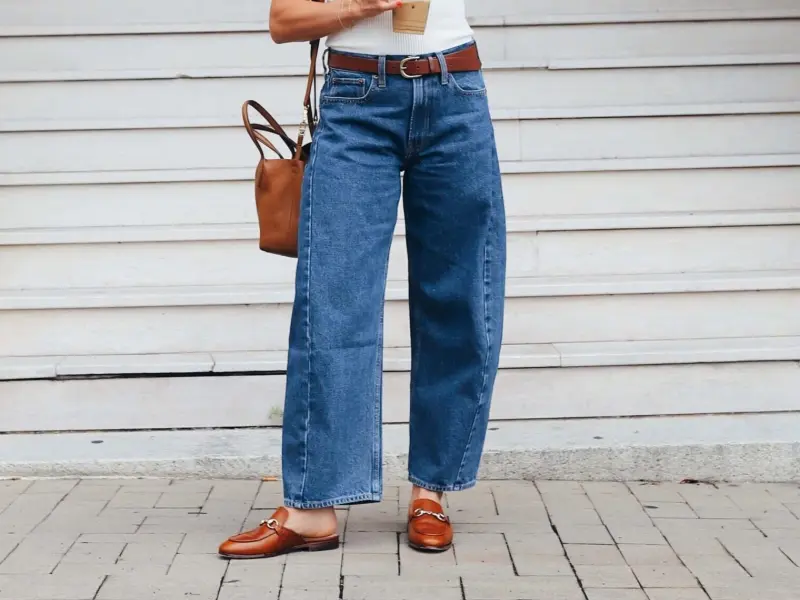
Barrel and baggy jeans remain relevant, but they should not be treated as interchangeable oversized fits. Baggy denim usually creates its character through generous seat and thigh ease, a relaxed rise, larger pocket proportions, and enough length to fall loosely or stack around footwear. Barrel or horseshoe jeans depend on a curved leg that moves outward and then returns inward before the hem, making fabric support much more important. If the cloth is too soft, the curve disappears and the jean reads as a loose straight style; if the denim is overly stiff and the pattern carries too much width, the shape can stand awkwardly away from the body. JEANZIO’s pattern-development system classifies barrel and horseshoe silhouettes as more demanding trend blocks, with side-seam curvature, knee width, hem reduction, and fabric structure working together. For most collections, these fits are strongest as clearly defined trend products rather than automatic replacements for straight or wide-leg core jeans.
Which Jean Rises and Lengths Will Matter?
Rise and length can refresh an established fit as effectively as changing the whole leg shape. A high-rise wide leg produces a longer visual line from waist to floor, while a mid-rise version often feels more relaxed and a lower rise can push the same general silhouette toward a slouchier attitude. Straight jeans also change character when the inseam changes: cropped or ankle lengths expose footwear and create a cleaner break, standard full lengths remain versatile, and extra-long versions intentionally stack or puddle. The useful development lesson is that a brand does not always need another fit block to create newness. Changing rise, inseam, wash, and fabric can create substantial product separation. Finished length should be evaluated after the intended wash rather than only on an unwashed sample. Even modest denim shrinkage becomes highly visible when a flare no longer reaches the intended shoe line, a crop finishes too high, or a puddle jean loses the additional length that created its styling effect.
Which Denim Washes and Colors Will Trend in 2027?
The 2027 wash story is likely to split between cleaner and more intentionally aged denim. Deep indigo, rinse and raw-looking surfaces support polished silhouettes, while authentic mid-blue, light vintage and controlled distressed finishes keep denim’s worn character relevant. The strongest products will use wash as part of the fit and fabric decision, with clear shade standards and repeatable effects rather than relying on random variation to create visual interest.
| Wash / Color Direction | Visual Character | Strong Product Uses | Main Bulk Control |
| Clean dark indigo | Polished, saturated, minimal | Straight, slim, wide, skirts, sets | Lot and shade consistency |
| Raw or light rinse | Structured, crisp, premium | Jeans, skirts, dresses, vests | Shrinkage, crocking, handfeel |
| Mid-blue vintage | Familiar, authentic, commercial | Straight, wide, relaxed, jackets | Fading and whisker repeatability |
| Light wash | Soft, seasonal, casual | Wide leg, shorts, skirts, shirts | Batch-to-batch shade control |
| Controlled distressed | Fashion-led, worn-in | Baggy, straight, shorts, statement styles | Placement, size, reinforcement |
Is Dark Indigo Becoming a Core Direction?
Dark indigo has strong commercial logic because it can make familiar denim look cleaner without forcing customers into an unfamiliar silhouette. It works well on straight, slim, bootcut, tailored wide-leg, skirt, vest, dress, and coordinated-set products, and it can move denim closer to polished daywear. The manufacturing challenge is that a clean surface makes inconsistency easier to see. Small differences between fabric dye lots or wash loads can stand out more clearly than they do on heavily faded denim. Variables include the raw fabric shade, lot, shrinkage, recipe sequence, machine load, time, temperature, chemical strength, and any manual finishing. JEANZIO’s color-control matrix therefore links fabric-lot separation, approved wash standards, first-lot confirmation, recipe version control, post-wash comparison, shade grouping, and traceability. The goal is not to claim that natural denim can have zero shade variation, but to define an approved visual window and keep bulk production within it.

Are Vintage and Light Washes Still Relevant?
Vintage blue remains one of denim’s most recognizable and commercially flexible finishes, but the strongest direction is increasingly controlled rather than aggressively processed. A mid-blue wash with natural-looking whiskers, gradual abrasion, and balanced contrast can work on straight, wide, relaxed, mom-inspired, and jacket styles without limiting the customer to one styling mood. Light wash remains especially useful for spring and summer, shorts, skirts, shirts, and softer wide silhouettes. JEANZIO’s women’s wash framework similarly maps mid-blue authentic vintage to mainstream fits and lighter washes to wide-leg jeans, shorts, and skirts. The casual appearance can hide how technical the process really is. Laser artwork, sanding intensity, enzyme level, mechanical action, softener, drying, garment construction, and machine load all affect the result. When a jacket and jean are intended to match, they should be reviewed together because even the same base fabric can develop a different shade when construction and washing conditions differ.
Do Distressed and Decorative Finishes Still Matter?
Distressing and decoration still matter, but more value comes from deliberate placement than from simply increasing the amount of damage. A ripped knee, worn pocket edge, raw hem, laser motif, embroidered panel, or rhinestone artwork can give a familiar silhouette a clear reason to exist, especially in a collection where several core fits use similar denim. The production standard needs to be more precise than the visual idea. A knee opening needs an approved position and size range; a raw hem needs a finished inseam before fraying and an expected appearance after wash; embroidery needs placement, thread, backing, and distortion review; rhinestones need artwork dimensions, spacing, bonding conditions, and durability checks. JEANZIO’s post-wash inspection logic checks overall shade, localized fading, seam highs and lows, whisker or laser appearance, and abnormal marks before garments are grouped for later handling. A good statement finish looks effortless to the customer because the technical controls are doing the hard work behind it.
How Can Wash Consistency Be Controlled?
Wash consistency begins before garments reach the washing stage. Fabric lots need to remain identifiable, shrinkage and raw shade need to be understood, and manual effects should use approved positions or templates when the design depends on them. During bulk washing, the first lot becomes an important decision point because it shows whether the approved recipe and actual production conditions are producing the expected shade, handfeel, shrinkage, and surface effect. JEANZIO manages three long-term specialist washing partners and uses approved standards, shade grouping, wash-lot traceability, and QC handover rather than presenting outsourced washing as an uncontrolled external step. JEANZIO has worked with these specialist washing partners for more than 10 years, while recipe changes, machine conditions, chemicals, fabric lots, and manual effects are treated as variables that must remain traceable. This matters especially when a successful style moves into repeat orders months later, because an old recipe alone does not guarantee the same current result.
Which Denim Fabrics Will Shape 2027?
Rigid denim, comfort stretch, controlled low-stretch fabrics, and lighter drapey denim are all likely to matter in 2027 because different silhouettes require different forms of support. The useful trend is not a single winning fiber composition or weight. It is more disciplined fabric-to-fit matching, where structure, recovery, drape, wash response, season, and end use are considered before a pattern and wash route are finalized.
| Denim Weight | Typical Product Direction | Seasonal Role | Main Development Concern |
| 8-9.5 oz | Shirts, dresses, soft wide legs, summer styles | Spring/summer and warm markets | Drape, seam puckering, stability |
| 9.5-11 oz | Straight, wide, skirts, versatile jeans | Cross-season | Balance of structure and comfort |
| 11-12 oz | Core jeans, structured bottoms | Broad year-round use | Shrinkage, handfeel, wash response |
| 12-13 oz | Rigid jeans, vintage styles, jackets | Structured or cooler-season products | Stiffness, bulk, post-wash comfort |
Is Rigid Denim Becoming More Important?
Rigid denim is well placed for 2027 because several important silhouettes depend on the fabric contributing to the shape. Wide legs, barrel jeans, baggy fits, carpenter styles, raw skirts, structured jackets, and some dresses benefit when the cloth holds a line instead of simply following the body. Rigid should not be reduced to the idea of “stiff 100% cotton.” Yarn character, weight, weave density, finishing, and washing can make two rigid fabrics with the same nominal weight behave very differently. The useful question is how much structure remains after the intended finishing route. A barrel jean needs enough support to preserve its curve; a clean wide trouser needs a controlled fall; a vintage baggy jean can tolerate more broken-in softness as long as the seat and leg retain their intended balance. Rigid fabrics also require attention to shrinkage and twist. Pattern allowances should anticipate the planned wash instead of waiting until final inspection to discover that the garment has shortened or shifted.
Which Stretch Denim Fits Work Best?
Stretch denim remains important even as raw and rigid-looking products gain attention. Slim, skinny, curvy, fitted, and comfort-focused styles still need mobility, and moderate stretch can also improve straight jeans without making the garment look obviously elastic. The critical technical question is recovery, not only extension. A fabric can stretch easily when new but fail to return after sitting, walking, or washing, producing knee bagging, waist growth, or a loose seat. Wash conditions can also damage some stretch systems, particularly when aggressive bleach, high temperature, or strong mechanical abrasion are involved. JEANZIO’s fit compatibility matrix prioritizes stretch or high-stretch denim for skinny and curvy fits, comfort stretch for slim fits, and rigid or comfort stretch for straight silhouettes. For a current-looking slim jean, the best result usually comes from a pattern that allows controlled ease and a fabric that recovers well, rather than using extreme stretch to compensate for a pattern that is fundamentally too tight.
Is Lightweight Denim Growing?
Lightweight denim becomes more relevant as the category moves beyond traditional five-pocket pants. Shirts, dresses, long skirts, jumpsuits, warm-weather trousers, and softer sets often need more movement than a classic rigid jean fabric can provide. JEANZIO’s fabric-to-season development framework uses approximately 8-9.5 oz as a common spring/summer and warmer-market range, 9.5-11 oz as a broad cross-season zone, 11-12 oz for core year-round bottoms, and 12-13 oz for more structured, vintage, or cooler-season products. These ranges are practical guides rather than universal rules because weave, yarn, finishing, climate, and garment structure can change how a fabric feels. Lighter denim also creates its own risks: seam puckering, twisting, wavy hems, transparency, pocket sag, and unstable drape can become more visible. The advantage is category flexibility. A brand can build a denim dress or soft wide trouser that still reads as denim without making the garment feel like a heavy pair of jeans.
How Should Fabric Match the Wash?
Fabric and wash should be selected together because the finishing route can change the exact properties that made the fabric attractive in the first place. Rigid cotton generally provides more freedom for vintage fading and mechanical aging, while high-stretch denim needs a more cautious approach when heavy bleach, high heat, or aggressive abrasion are planned. Lightweight denim may produce a beautiful soft wash but lose stability if the process is too harsh. JEANZIO’s fabric-to-wash guidance explicitly considers composition, weight, stretch and recovery, handfeel, shrinkage, target shade, and wash route before full development. A practical sequence is to define the target silhouette and final washed appearance, identify the closest mature base fabric, run a small trial or wash swatch, evaluate handfeel and dimensions, and then move into the garment sample. Full custom weaving makes sense when existing fabrics cannot achieve the required structure, texture, stretch, or visual character, not simply because “custom” sounds more premium.
Which Women’s Denim Pieces Will Matter Beyond Jeans?
Women’s denim in 2027 should extend well beyond five-pocket jeans. Skirts, dresses, jackets, shirts, vests, shorts, jumpsuits, and coordinated sets let a brand use denim as a collection language rather than a single bottom category. These products also create more ways to express raw surfaces, lighter fabrics, tailoring, utility details, and decoration while sharing selected materials, washes, trims, and visual references across a seasonal range.
Are Denim Skirts and Dresses Becoming More Important?
Denim skirts are one of the most practical ways to extend a jeans collection because they can share fabric, thread, hardware, labels, and wash language with existing bottoms while creating a visibly different product. Mini, midi, maxi, A-line, pencil, front-slit, cargo, and asymmetric versions all require different balance. JEANZIO’s women’s product-development range identifies waist-to-hip fit, slit construction, walking ease, front-and-back balance, and post-wash hem stability as major controls, particularly for longer skirts where twist becomes more visible. Dresses add another layer of complexity because the garment may need to balance bust, waist, hip, neckline, shoulder, zipper, hem, and movement at the same time. Shirt dresses, fitted minis, midi styles, fit-and-flare shapes, utility dresses, and corset-inspired denim all use fabric differently. A soft lightweight cloth may be ideal for movement but too weak for a structured bodice, while a heavier rigid denim can create shape but reduce comfort if the pattern does not allow enough movement.

Are Denim Jackets and Vests Changing Shape?
Denim jackets are increasingly differentiated through proportion rather than through the basic trucker construction alone. A cropped jacket changes the relationship between the upper body and high-rise bottoms, a fitted jacket supports a cleaner and more polished denim story, an oversized or boxy jacket works with narrow or straight legs, and chore or utility versions add practical pocket and seam language. JEANZIO’s women’s product-development framework highlights shoulder width, chest ease, body length, sleeve volume, and collar shape as key variables for jacket development. Vests extend the same logic into layering and coordinated dressing. Classic, fitted, cropped, utility, and corset-inspired vests can pair with jeans or skirts without requiring an entirely separate fabric platform. Removing the sleeve does not remove fit complexity: armhole shape, bust contour, darts or princess seams, center-front closure, and hem position become highly visible. A vest intended to form a set should be fitted with its matching bottom because the proportion of the two garments matters as much as the fit of either piece alone.
Do Denim Sets and Jumpsuits Have Commercial Potential?
Denim sets have practical commercial value because a single fabric or wash direction can support several sellable pieces while creating a complete styling story. Jacket-and-jeans, vest-and-jeans, shirt-and-skirt, and cropped-jacket-and-shorts combinations can be photographed together and purchased separately, which gives the collection visual coherence without forcing the customer into a one-piece outfit. The production advantage is the possibility of shared fabric, thread, hardware, and wash standards; the risk is that matching products make inconsistency more obvious. JEANZIO therefore treats sets as multi-SKU collection units in which fabric lot, wash target, trims, and fit language need coordinated management. Jumpsuits are more technically demanding because torso length, waist position, front and back rise, hip ease, closure, and leg shape all interact. JEANZIO’s development guidance identifies torso length, crotch depth, and waist-to-hip balance as key controls and recommends reviewing movement together with post-wash measurements after the first sample.
How Can One Denim Fabric Support More Categories?
A shared fabric platform can make a seasonal denim collection easier to develop, source, and reorder, but only when the same fabric genuinely suits the different products. An 10.5 oz denim may work well across straight jeans, a skirt, and a cropped jacket, while a softer 8.5-9 oz option may be better for a shirt, dress, or relaxed jumpsuit. Sharing fabric can reduce the number of independent material lots and help maintain a consistent color story, yet the wash may still need different treatment because a jacket, skirt, and jean contain different seam thicknesses and garment volumes. The most effective approach is to build a small material platform around compatible product groups rather than forcing every denim item onto one cloth. This also improves repeat-order control because the approved fabric, shrinkage behavior, shade history, and wash response can be reused across several styles. When a collection is planned this way, category expansion becomes an engineering decision as well as a merchandising one.
How Can Brands Develop 2027 Denim Trends for Production?
Brands can turn 2027 denim trends into workable products by separating dependable core fits from seasonal experiments, matching silhouette with fabric and wash, testing uncertain ideas through controlled samples, and freezing measurable standards before bulk production. The goal is not to reproduce every trend visible online. It is to identify which ideas fit the target customer, price level, launch calendar, and quantity, then make those ideas repeatable across sizes and production lots.
Which Trends Belong in the Core Range?
A strong collection gives different products different jobs. Core jeans should support repeat sales and remain understandable beyond one fashion cycle, while trend styles can carry more visible risk and statement pieces can create campaign interest. JEANZIO’s women’s collection-development framework uses a practical planning reference of roughly 40% core fits, 25% trend silhouettes, 20% category extensions, 10% statement products, and 5% coordinated set or capsule pieces. These percentages are not a universal retail formula, but the underlying logic is useful. A brand with strong wide-leg sales may keep wide leg in its core group while introducing a slim-straight or barrel fit as seasonal newness. Another brand may already own a straight-leg franchise and use embroidered or raw-denim products to refresh the range. The important point is diversification. If every SKU relies on the same rise, wash, and silhouette staying fashionable, the collection is more exposed to a trend shift and offers customers fewer reasons to buy a second or third denim product.
How Should Fit, Fabric and Wash Work Together?
Fit, fabric, and wash should be approved as connected variables because changing any one of them can change the other two. Consider a wide-leg sample approved in an 11.5 oz structured denim with a clean rinse. Moving the same pattern to an 8.5 oz drapey cloth may leave the waist measurement unchanged while transforming the leg shape. Changing the rinse into a stronger vintage wash can then alter shrinkage, handfeel, seam appearance, and finished inseam. The production standard should therefore identify the approved pattern version together with the material specification and finishing route. JEANZIO’s bulk-size control logic links fabric shrinkage input, pattern version, cutting and sewing control, first-bulk wash, after-wash measurement, inline inspection, final inspection, and lot records so size drift can be traced to its actual source. This becomes especially important for barrel jeans, fitted dresses, and extra-long silhouettes where relatively small material or wash changes can noticeably alter the intended shape.
How Can Brands Test a New Trend?
A new trend should first answer a small set of practical questions: does the silhouette work on the target body, does the fabric support it, can the wash be reproduced, does the finished garment move comfortably, and can the product reach the intended cost and quantity? The development loop should be built around those questions rather than around the number of sample rounds. JEANZIO’s current development structure includes 3 designers, 6 pattern makers, and 15 sample makers, supporting approximately 60-90 new style developments per month. First samples are typically developed in about 7-15 days, while revision and PP samples commonly require about 7-10 days depending on materials, wash, trims, and complexity. Those figures are useful as planning ranges, not unconditional guarantees. A straight jean using an existing fabric and wash route is naturally different from a new barrel silhouette with custom hardware, strong fading, and decorative artwork. The cleanest revision process changes only the variables that failed, so the team can identify what actually improved the product.
How Can Sample Details Survive Bulk Production?
Bulk consistency begins by turning sample decisions into standards that different departments can follow. The approved garment alone is not enough. Typical custom denim development at JEANZIO is structured around approximately 300-500 pieces per style and color, with actual feasibility influenced by fabric, wash, trims, decoration, color splitting, and the number of production units created by the SKU structure. Before bulk production, the project should have a controlled pattern version, measurement specification, approved fabric, trim references, wash standard, shade range where relevant, decoration artwork, and packing requirements. The quality system then moves through incoming-material review, cut-panel control, inline sewing inspection, pre-wash review, first-bulk and post-wash checks, 100% finished-garment inspection, final audit under AQL 2.5 or a customer-specific plan, and packing verification. This sequence is what turns an attractive sample into a product that can survive hundreds or thousands of units without losing the design decisions that made the sample successful.
Women’s denim in 2027 is best understood as a broader choice of proportions rather than a race to identify one replacement for the last major fit. Wide legs can become sharper, straight jeans can remain dependable, slim silhouettes can return in cleaner forms, and barrel or baggy fits can continue as controlled fashion statements. Dark and raw-looking denim can sit beside authentic vintage blue, while skirts, dresses, jackets, vests, and sets give brands more ways to use denim beyond the traditional five-pocket jean. The strongest collection decisions will come from connecting trend awareness with product engineering: define what the silhouette is meant to do, choose a fabric that supports it, create a wash that reinforces the design, test the finished measurements, and document the standard well enough to reproduce it. That is how a trend becomes a product customers can wear, reorder, and recognize as part of a consistent brand identity.
Frequently Asked Questions
What women’s jeans will be in style in 2027?
Wide-leg jeans are likely to remain important, but 2027 should offer a more balanced fit landscape that also includes straight, slim-straight, cigarette, bootcut, flare, baggy, and barrel silhouettes. The strongest styles will be differentiated by more than leg width. Rise, seat ease, knee position, inseam, hem shape, fabric structure, and wash all influence whether a fit feels current. Brands should therefore think in fit families rather than searching for one universal “winning” jean shape.
Are wide-leg jeans still in style for 2027?
Yes, wide-leg jeans should remain commercially relevant, but the category is becoming more segmented. Clean high-rise trouser shapes, relaxed mid-rise versions, low-slung wide fits, and extra-long puddle styles create very different results even when all are described as wide leg. Fabric selection also changes the look: rigid denim gives stronger architecture, while lighter or softer denim creates more movement. The next stage of the trend is likely to reward better proportion rather than simply adding more width.
Are skinny or slim jeans coming back in 2027?
Slimmer jeans are returning, although the most useful direction is broader than a revival of the old ultra-stretch skinny. Slim-straight, cigarette, stovepipe, and narrow bootcut shapes can follow the body without gripping every part of the leg. Fabric recovery and pattern ease are especially important because a modern slim jean should remain comfortable and keep its shape after wear. A cleaner dark wash or structured low-stretch fabric can also make a narrow silhouette feel newer than an older high-stretch construction.
What denim colors are expected to be popular in 2027?
Deep indigo, clean rinse, raw-looking denim, authentic mid-blue, and lighter seasonal blues are all useful 2027 directions rather than one color replacing the others. Dark denim supports polished straight, slim, wide, skirt, vest, and set products, while mid-blue vintage remains easy to wear across a broad range of fits. Light wash continues to work well for spring and summer. The commercial priority is to give each shade a clear role in the assortment and control lot-to-lot variation.
What denim weight is best for women’s jeans?
There is no single best weight because the right denim depends on silhouette, season, wash, and desired handfeel. As a practical guide, 8-9.5 oz denim is often useful for lighter spring/summer products, 9.5-11 oz works across many seasons, 11-12 oz suits a large share of core jeans, and 12-13 oz provides more structure for rigid or vintage-led styles. Weave, yarn, finishing, stretch, and wash can make fabrics at the same ounce weight behave very differently.
How should a brand develop a new 2027 denim style?
Start by defining the silhouette and the customer need before choosing every visual detail. Select a fabric that can support the intended shape, decide the target wash and handfeel, develop the pattern, review the first sample on the body, and check the garment again after the intended wash. Changes should be documented rather than adjusted informally. Before bulk production, freeze the approved pattern, measurements, fabric, wash standard, trims, decoration placement, and packing requirements so the sample can become a repeatable product.